Our Gallery

Contact Info

Kitchen Countertop Selection Tips

Kitchen Countertop Selection Tips by an Interior Designer

When homeowners start planning their kitchen, one question almost always comes up: “Which countertop should I choose?” As someone who has worked closely with Indian homes, families, and daily cooking habits, I can confidently say that your kitchen countertop is not just a design element; it’s a functional investment. As the best interior designer in Mumbai, I’ve seen how the right countertop choice can make daily cooking easier, improve hygiene, and significantly extend the life of your kitchen.

Indian kitchens are unique. They handle heavy utensils, hot pans, frequent spills, turmeric stains, pressure cookers, and long cooking hours. This means countertop selection needs more thought than simply choosing what looks good in a showroom. In this blog, I’ll walk you through practical, real-life tips to help you choose the right kitchen countertop based on usage, budget, maintenance, and long-term value.

Why Kitchen Countertops Deserve More Attention Than You Think

Most homeowners spend weeks selecting cabinets and appliances, but countertops are often decided in a hurry. This is a mistake. Your countertop is the most used surface in your kitchen, used 3 to 5 hours daily in many Indian households. Over a year, that’s over 1,000 hours of direct usage.

Once installed, changing a countertop is expensive, messy, and time-consuming. That’s why I always advise clients to treat countertop selection as a long-term decision, not a decorative afterthought.

Step 1: Understand Your Cooking Style (This Changes Everything)

Before choosing material or colour, ask yourself:

  • Do you cook daily or occasionally?
  • Do multiple family members use your kitchen?
  • Do you prefer elaborate Indian cooking or simple meals?
  • Are hot vessels placed directly on the counter?

For example:

  • A family that cooks twice a day with pressure cookers, grinders, and heavy kadhai needs a highly heat- and stain-resistant surface.
  • A couple that orders food often may prioritise aesthetic appeal over extreme durability.

Your cooking style should guide your material choice, not trends.

Step 2: Popular Kitchen Countertop Materials Explained (With Real Use Cases)

Granite – The Indian Kitchen Favourite

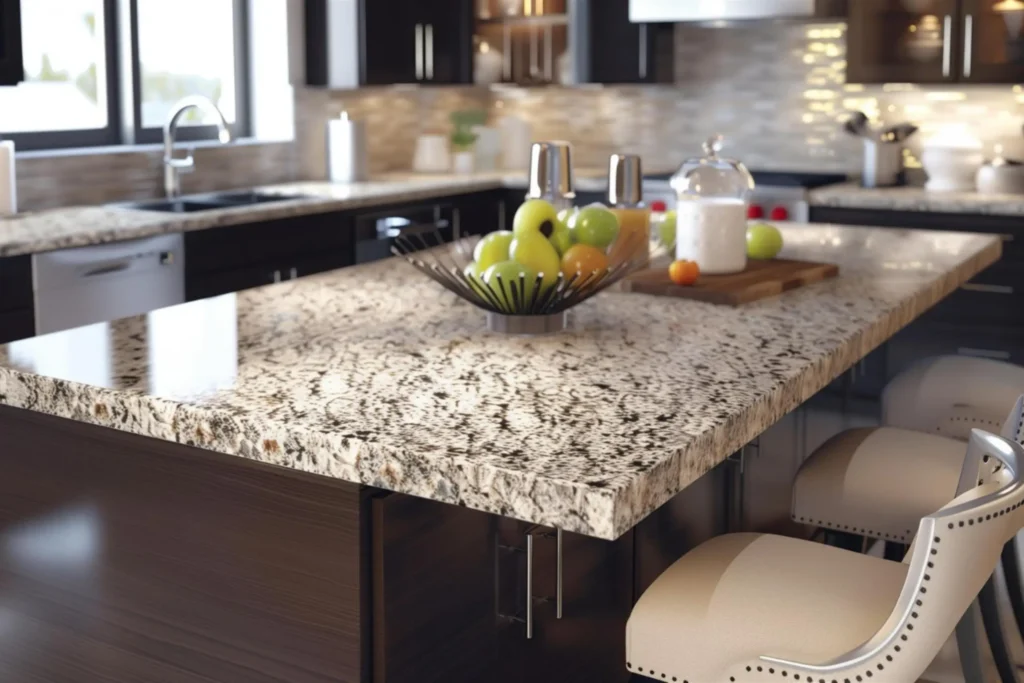
Granite Kitchen Countertop

Granite remains one of the most preferred choices in Indian homes and for good reason.

Why it works:

  • Handles heat up to 250°C
  • Resistant to scratches
  • Suitable for heavy utensils
  • Lifespan of 15–20 years with basic care

Real example:

In a 2BHK Kandivali apartment, a family of 4 chose black granite. Even after 8 years of daily cooking, the surface remains intact with minimal maintenance.

Watch out:

Granite needs sealing once a year to avoid oil absorption.

Quartz – Low Maintenance, High Consistency

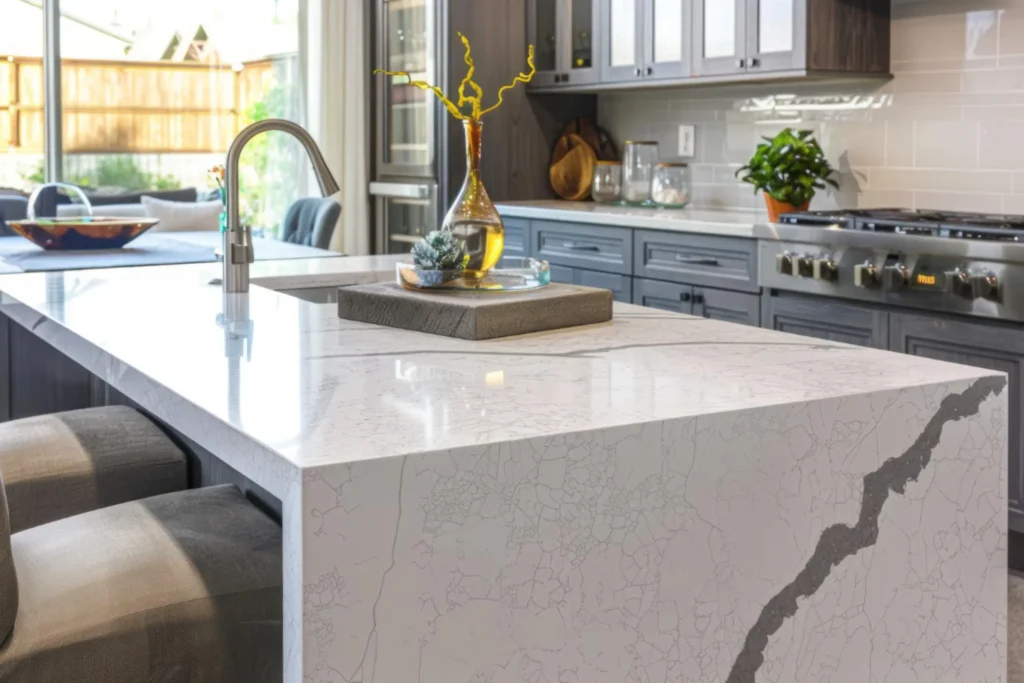
Quartz Kitchen Countertop

Quartz is an engineered stone made using natural quartz and resins.

Why homeowners love it:

  • Non-porous (no staining)
  • No sealing required
  • Uniform colour and finish
  • Easy daily cleaning

Numbers that matter:

Quartz countertops cost 20–30% more than granite, but reduce long-term maintenance costs significantly.

Best for:

Modern homes, working professionals, and families who want hassle-free upkeep.

Marble – Beautiful but High Maintenance

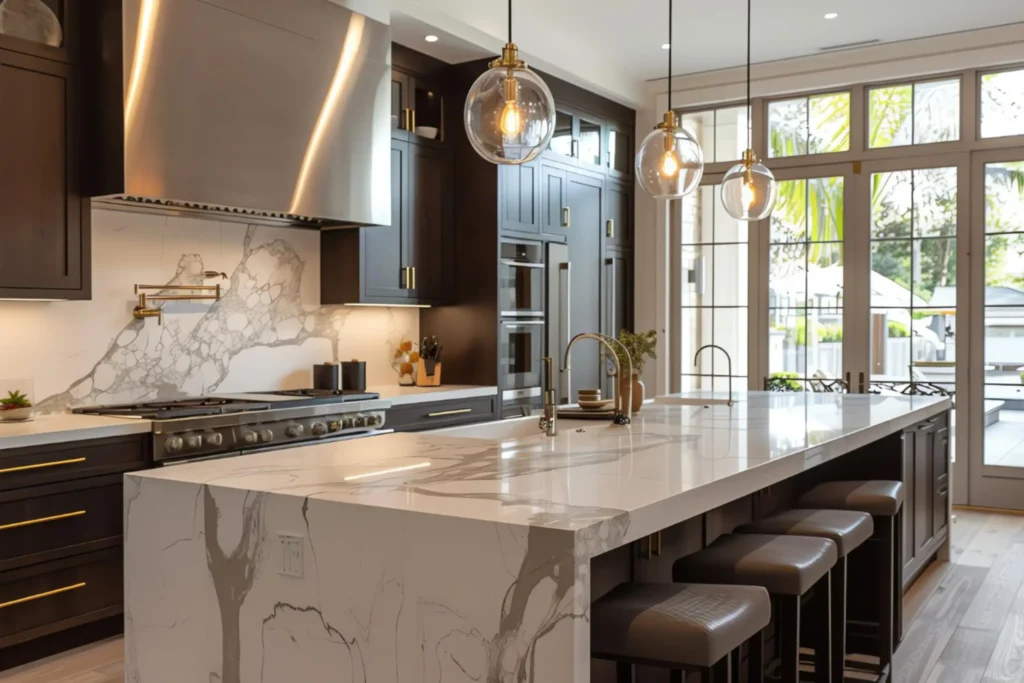
Marble Kitchen Countertop

Marble looks stunning but is not ideal for heavy Indian cooking.

Pros:

  • Luxurious appearance
  • Naturally cool surface

Cons:

  • Easily stains
  • Scratches easily
  • Requires frequent polishing

My honest advice:

Use marble only in dry kitchens or homes with minimal cooking.

Solid Surface & Laminates – Budget-Friendly Options

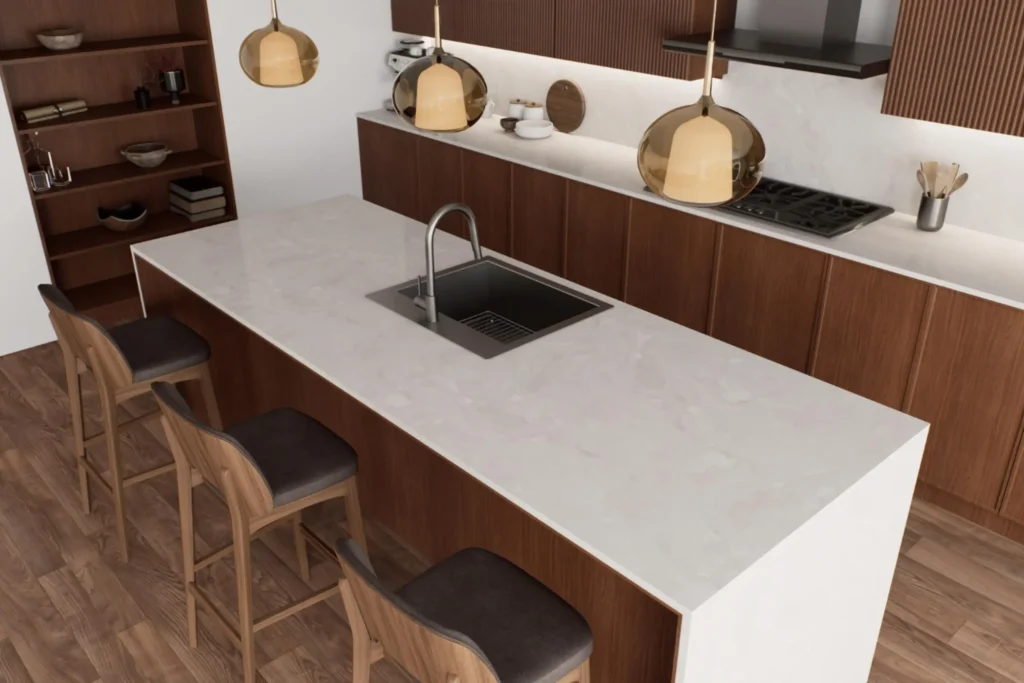
Solid Surface & Laminates Kitchen Countertop

For budget-conscious homeowners, solid surfaces and laminates are gaining popularity.

Why they work:

  • Cost-effective
  • Easy installation
  • Seamless look

Limitations:

Lower heat resistance and shorter lifespan compared to stone.

Step 3: Thickness & Edge Profile Matter More Than You Think

Most countertops range between 15mm and 20mm in thickness. Thicker slabs:

  • Look more premium
  • Handle weight better
  • Reduce the chances of cracking

Edge profiles like:

  • Straight edge (modern look)
  • Rounded edge (safer for kids)
  • Bevelled edge (classic feel)

These small details significantly affect safety, durability, and aesthetics.

Step 4: Colour Selection Based on Kitchen Size & Lighting

Colour isn’t just about preference; it impacts space perception.

  • Small kitchens: Light colours like beige, white, or light grey reflect light and make the space feel larger.
  • Large kitchens: Dark colours add depth and richness.
  • Poor natural light: Avoid very dark surfaces; they make the kitchen feel closed.

Pro tip:

Matte finishes hide water marks and fingerprints better than glossy ones.

Step 5: Maintenance Reality Check (Be Honest With Yourself)

Many homeowners choose materials without understanding daily care.

Ask yourself:

  • Will I wipe spills immediately?
  • Can I commit to sealing stone surfaces?
  • Do I want zero maintenance?

If the answer is no, choose materials like quartz that align with your lifestyle.

This is where professional interior designing services add real value by aligning material choices with how you actually live, not how the kitchen looks on Pinterest.

Step 6: Budget Planning With Long-Term Vision

Here’s a rough cost comparison (Mumbai market averages):

  • Granite: ₹180–₹350 per sq. ft.
  • Quartz: ₹300–₹600 per sq. ft.
  • Marble: ₹400–₹800 per sq. ft.
  • Solid Surface: ₹250–₹450 per sq. ft.

A 10×6 ft countertop area can range from ₹15,000 to ₹45,000, depending on the material.

Spending slightly more upfront often saves years of repair and replacement costs later.

Step 7: Common Mistakes I See Homeowners Make

  • Choosing colour before material
  • Ignoring heat resistance
  • Selecting glossy surfaces for heavy-use kitchens
  • Not checking the slab quality before installation
  • Skipping professional measurement

Avoiding these mistakes can easily extend your kitchen’s life by 5–7 years.

How Professional Guidance Makes a Difference

At Spriha Jain Interiors, countertop selection is never isolated. We plan it alongside:

  • Cabinet height and depth
  • Sink placement
  • Hob and appliance layout
  • Lighting reflection
  • Storage flow

This ensures your kitchen doesn’t just look good but works effortlessly every single day.

Final Thoughts: A Countertop Is More Than a Surface

Your kitchen countertop supports your daily routine, family meals, and countless moments. Choosing the right one means fewer repairs, easier cleaning, and a kitchen that ages gracefully with you.

If you’re planning a new kitchen or upgrading an existing one, professional guidance can help you avoid costly mistakes and make confident decisions. As a residential interior designer in Mumbai, thoughtful planning is the foundation of every successful home.

For personalised kitchen planning, material selection, and complete interior solutions, get in touch with Spriha Jain Interiors. We’d love to help you design a kitchen that truly fits your lifestyle.

Phone Phone WhatsApp WhatsApp
Contact Contact Us