When people start decorating their homes, most of them don’t have a clear plan. They buy furniture they like, add cushions they see online, hang some wall art, and still feel something is off. The house looks okay, but not “put together”.
This is where professional designers use simple mental rules to avoid overdoing things. One such rule is the 3-4-5 rule in interior design.
It is not a technical formula. It is a control rule. It helps designers decide when to stop adding things to a room.
This is precisely how the best interior designer in Mumbai would think while styling a home, not by copying trends, but by controlling excess.
Let’s understand this rule in the simplest way possible.
The Real Meaning of the 3-4-5 Rule
The 3-4-5 rule is about limiting variety so a room looks rich but not messy.
It guides designers on:
- How many patterns
- How many design styles
- How many colors or textures
Should exist in one space.
In simple words:
The rule stops you from adding “just one more thing” again and again.
What Does Each Number Actually Stand For?
3 = Patterns
Patterns include:
- cushion prints
- rug designs
- wallpaper
- fabric designs
The rule says:
Do not use more than 3 different patterns in one room
Why?
Because our eyes get tired when too many patterns compete.
Example:
- Pattern 1: Rug design
- Pattern 2: Cushion print
- Pattern 3: Curtain texture
Anything more starts to look busy.
4 = Design Styles or Influences
This part is misunderstood most often.
Design styles mean:
- modern
- classic
- rustic
- minimal
- vintage
- industrial
The rule suggests:
Mix up to 4 design influences, not more
Real-life example:
- Modern sofa
- Wooden coffee table (natural/rustic)
- Simple modern lights
- One classic mirror or artwork
If you add too many styles, the room loses identity.
5 = Colors or Textures
This does NOT mean five bright colors.
Textures also count:
- wood
- fabric
- metal
- glass
- stone
Example of 5 without loud colors:
- Off-white walls
- Wooden floor
- Fabric sofa
- Metal light fixture
- Glass table
Even neutral rooms need texture to avoid looking flat.
Why Designers Actually Use This Rule
Most people think designers decorate by instinct. That’s not true.
Designers use rules like this because:
- Clients keep changing their minds
- Pinterest ideas get mixed together
- Budgets get wasted on unnecessary items
How This Rule Solves Common Home Problems
Let’s talk about real problems homeowners face.
Problem 1: Room looks cluttered
Reason:
- Too many cushion designs
- Too many decor pieces
- Too many colors
Solution:
- Reduce patterns to 3
- Stick to 4 style influences
- Limit textures/colors to 5
Problem 2: Room looks boring
Reason:
- Only one texture
- Only one style
- Everything matches too much
Solution:
- Add controlled contrast within the 3-4-5 limit
Living Room Example (Very Practical)
Imagine a normal Mumbai living room of 120–150 sq ft.
Using the rule correctly:
Patterns (3):
- Rug pattern
- Cushion print
- Curtain texture
Styles (4):
- Modern sofa
- Wooden table
- Minimal lights
- One classic wall art
Colors/Textures (5):
- Cream walls
- Wooden furniture
- Fabric sofa
- Metal lamps
- Glass table
Result:
The room looks finished, not crowded.
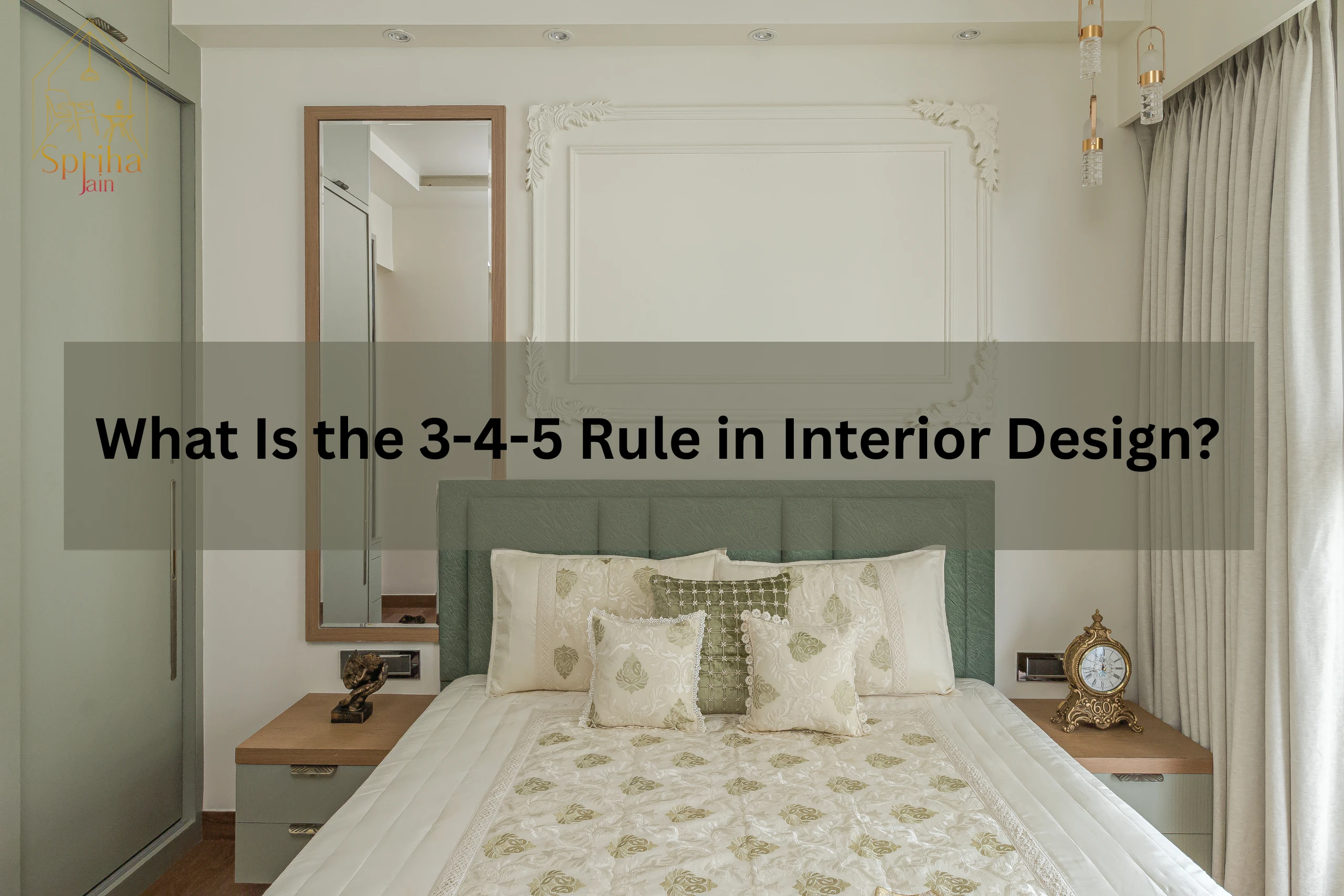
Bedroom Example (Simple and Calm)
Bedrooms need rest, not drama.
Patterns:
- Bedsheet
- Cushion cover
- Curtain
Styles:
- Modern bed
- Simple side table
- Soft lighting
- One decorative element
Textures:
- Fabric
- Wood
- Paint
- Metal
- Soft rug
This is why hotel rooms feel peaceful — they follow this thinking.
Why This Rule Is Important for Indian Homes
Indian homes are:
- Smaller in size
- Multi-purpose
- Used by families, not just for show
That’s why designers working as residential interior designer in Kandivali rely on such rules to:
- keep movement space clear
- reduce visual noise
- make homes easy to maintain
Too many elements in small homes create stress.
Does the Rule Change for Small Flats?
The rule becomes even more important.
In a 1BHK or compact 2BHK:
- Stick to 2–3 patterns
- Keep styles minimal
- Use textures instead of bold colors
Small homes need restraint, not decoration overload.
Can Normal Homeowners Follow This Rule?
Yes, absolutely.
You don’t need design training.
Next time you shop:
- Count patterns
- Notice styles
- Feel textures
If something feels “too much”, it probably is.
Is the 3-4-5 Rule Mandatory?
No rule in design is mandatory.
But this rule works because:
- It matches how human eyes process space
- It prevents impulse buying
- It saves money and regret
Experienced designers sometimes break it — beginners should not.
FAQs
Q1. What is the 3-4-5 rule in interior design?
The 3-4-5 rule is a simple decorating guideline that helps you balance a room. It means using up to three patterns, four design styles, and five colors or textures so the space looks complete but not messy.
Q2. Why do interior designers use the 3-4-5 rule?
Designers use this rule to control over-decorating. It helps them decide when a room is finished and prevents adding too many things that make the space look crowded.
Q3. Can I use the 3-4-5 rule without hiring an interior designer?
Yes. Homeowners can easily follow this rule while choosing furniture, cushions, curtains, and decor. It helps you avoid common decorating mistakes.
Q4. Can I mix modern and traditional furniture using this rule?
Yes. Mixing styles is allowed, but you should limit it. The rule suggests not mixing more than four design styles in one room.
Q5. Is the 3-4-5 rule the same as the 60-30-10 color rule?
No. The 60-30-10 rule focuses only on color balance, while the 3-4-5 rule covers patterns, styles, and textures too.