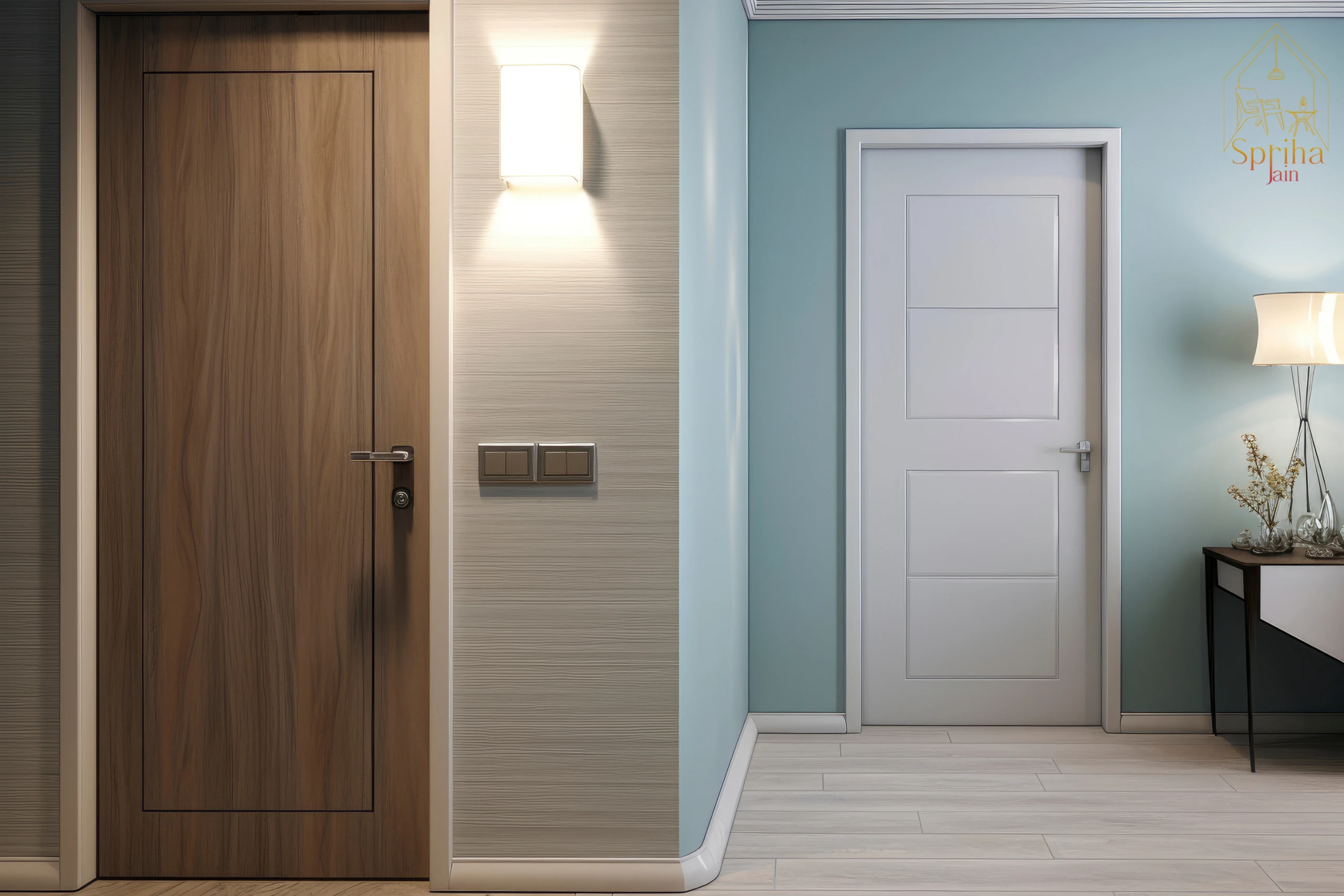
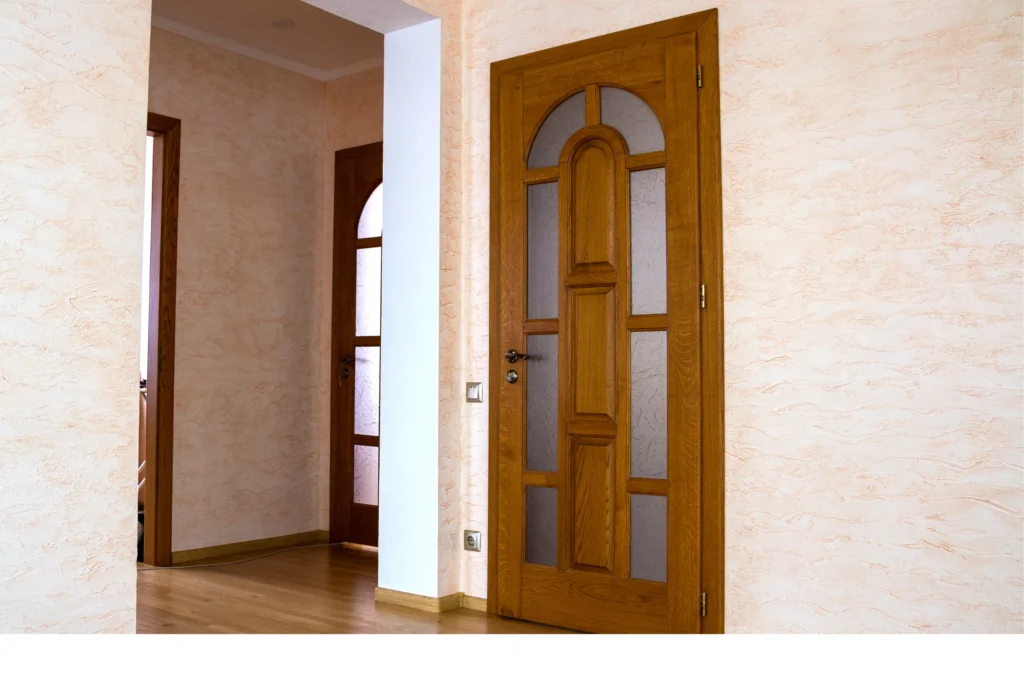
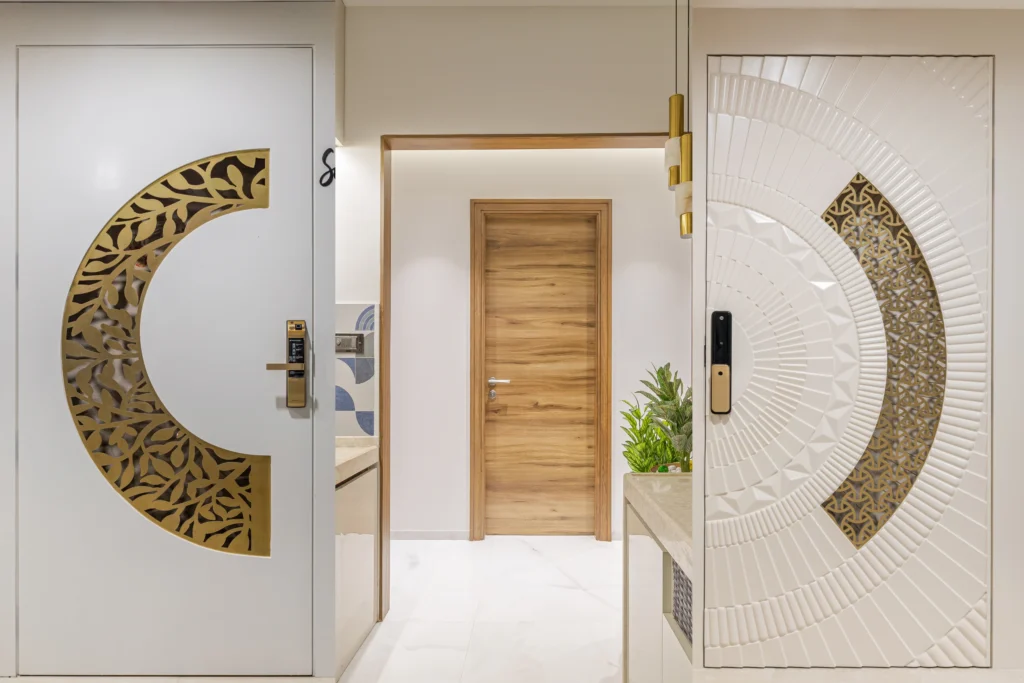
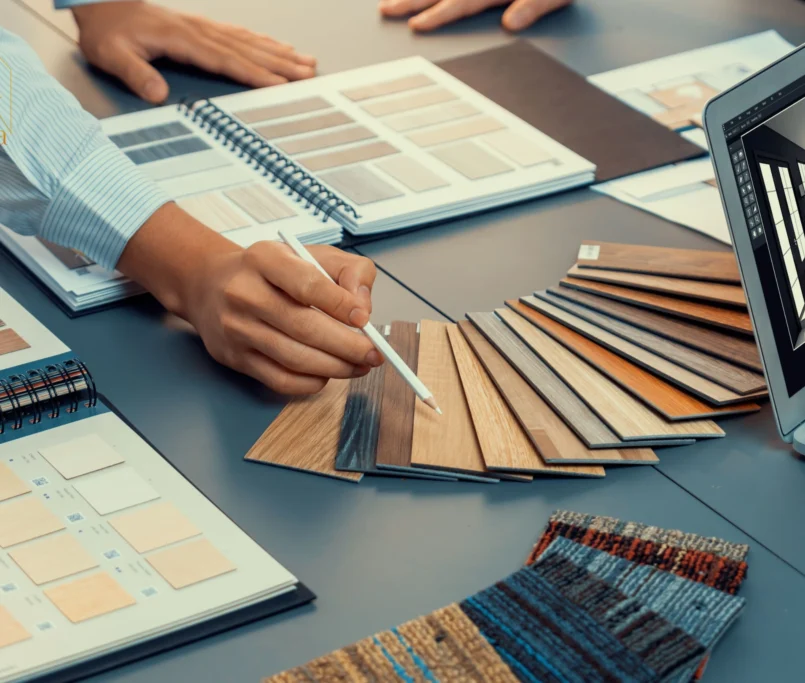
Laminated doors are made by sticking a laminate sheet on plywood or MDF using adhesive. Unlike membrane, laminate is a separate sheet, so you will see edge banding on the sides.
Real-life example: In modular kitchens, especially near the gas stove or sink, we often recommend laminates because they handle heat, moisture, and daily cleaning better.
Membrane vs Laminated Doors – Quick Comparison
Here is a simple comparison most homeowners want:
Feature | Membrane Doors | Laminated Doors |
Look | Seamless, no joints | Sharp, sheet-based finish |
Design | Best for curved & classic patterns | Best for modern flat designs |
Durability | Medium | High |
Water resistance | Moderate | High |
Heat resistance | Low | High |
Maintenance | Easy but needs care | Very easy |
| | | |
Best for | Bedrooms, wardrobes | Kitchens, high-use areas |
1. Seamless Finish
Since there are no visible joints, membrane doors look smooth and premium.
2. Great for Classic Designs
If you want a royal bedroom wardrobe, membrane is perfect because laminates cannot cover curved patterns.
3. Budget-Friendly for Large Wardrobes
For larger wardrobes, membrane can be more cost-effective compared to high-end laminates, making it a smart choice when you want to balance design and budget.
4. Low Maintenance for Bedrooms
In dry areas like bedrooms, membrane doors last 8–10 years easily if handled properly.
Cons of Membrane Doors
1. Not Heat Resistant
Near a gas stove, the membrane can start peeling in 2–3 years.
2. Moisture Sensitivity
If water enters the edges, MDF inside may swell.
3. Limited Modern Finishes
High-gloss, metallic, and textured finishes are better in laminates.
Pros of Laminated Doors
1. High Durability
Laminates can last 12–15 years with daily use, making them ideal for kitchens.
2. Water and Heat Resistance
Perfect for areas near the sink, dishwasher, and cooking zone.
3. Wide Variety of Designs
From matte, glossy, suede, woodgrain to metallic, laminates offer hundreds of options.
4. Scratch Resistant
If you have kids or pets, laminates handle rough use better.
Cons of Laminated Doors
1. Visible Joints
You will see edge banding on the sides.
2. Slightly Higher Cost
Good quality laminates cost 10–20% more than membrane.
3. Not Suitable for Curved Designs
Only flat panel designs work well.
Where Should You Use Membrane and Laminates?
This is the most important question homeowners ask.
Best Use of Membrane Doors
- Bedroom wardrobes
- Loft shutters
- TV unit panels with classic design
- Study room storage
Best Use of Laminated Doors
- Modular kitchens
- Bathroom vanity units
- Shoe cabinets near entrance
- Kids’ room wardrobes
Many home interior designers in Kandivali follow this hybrid approach to balance budget and durability.
Real Project Example from Kandivali
In a recent 2BHK project:
Kitchen shutters were done in matte laminate.
The bedroom wardrobe used membrane with a routed design.
Result:
The kitchen still looks new even after years of daily cooking and regular use.
The wardrobe delivered a premium, elegant appearance at a noticeably lower cost compared to laminate.
This combination helped the client optimize the budget while maintaining high functionality and aesthetics.
Maintenance Tips
Membrane:
- Avoid excess water
- Do not place near heat
- Clean with dry or slightly damp cloth
Laminates:
- Can be cleaned with mild soap solution
- Scratch-resistant but avoid sharp objects
Which One Should You Choose?
Choose membrane if:
- You want a classic or royal design
- It is for a bedroom or dry area
- You want a budget-friendly premium look
Choose laminate if:
- It is for a kitchen or bathroom
- You need high durability
- You prefer modern flat designs
If your goal is long life + balanced budget, the best solution is a combination of both, which most professional home interior designers in Kandivali recommend.
Final Verdict
- Membrane = Better looks for bedrooms, lower cost
- Laminate = Stronger, longer lasting, best for kitchens
- Mix both = Smartest and most cost-effective option
Your choice should depend on where you are using the door, not just the price.
Need Expert Guidance?
At Spriha Jain Interiors, we help homeowners choose the right materials based on usage, budget, and lifestyle, not just trends. That’s why many clients consider us among the most trusted home interior designers in Kandivali for practical and long-lasting interior solutions.
If you are planning your modular kitchen, wardrobe, or full home interiors and are confused between membrane and laminate, expert planning can help you save significantly in the long run and avoid costly mistakes.