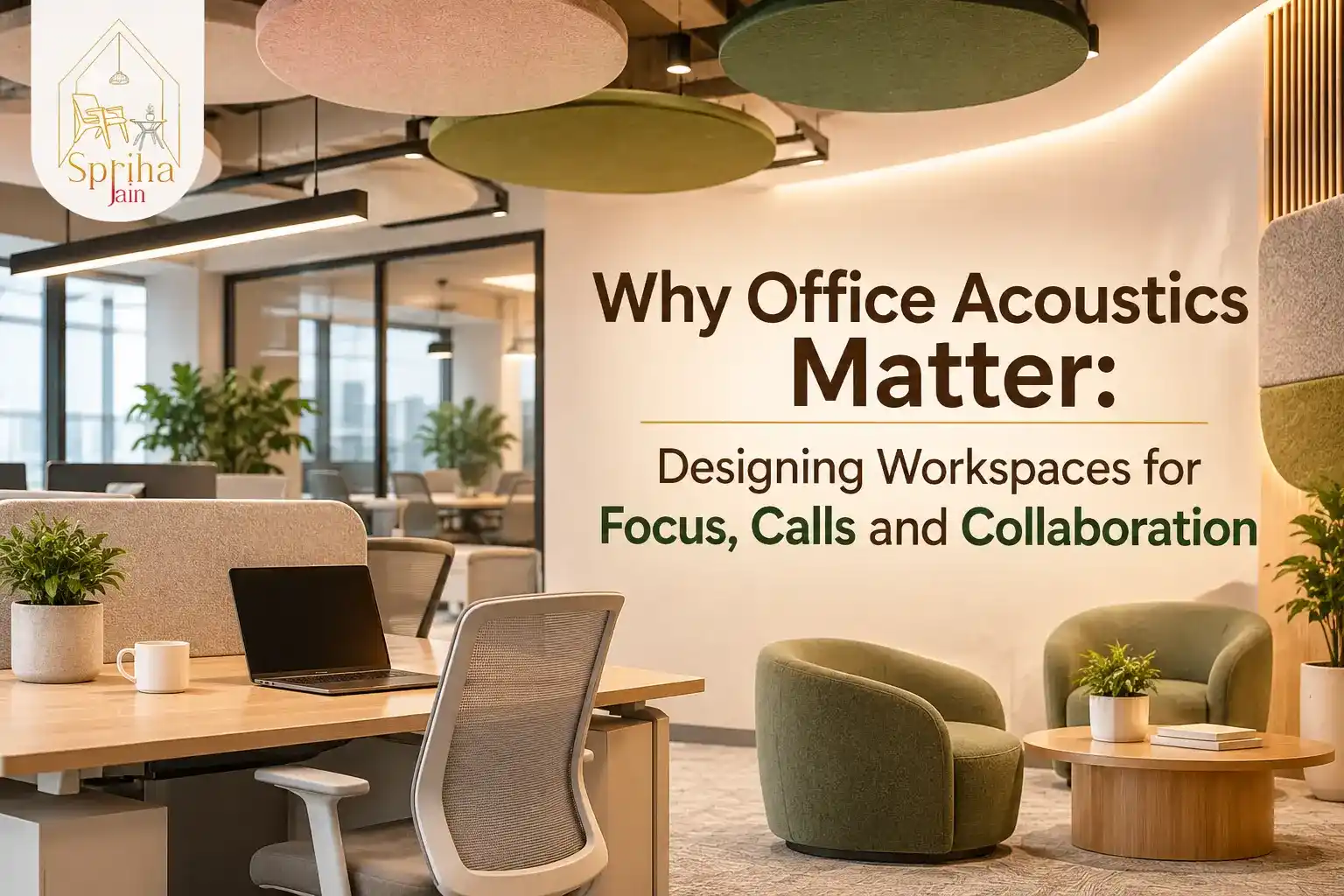
Why Office Acoustics Matter: Designing Workspaces for Focus, Calls and Collaboration
You’re on an important client call, and someone two desks away bursts out laughing. Or you’re trying to finish a proposal while the printer, the AC and three separate conversations fight for your attention. Nobody planned for that noise, but everyone pays for it. This is the hidden cost of poor office acoustics, and it shows up in almost every busy workplace in Mumbai.
Most business owners spend weeks choosing chairs, lights and paint colours. Sound rarely makes the list. Yet the way a space sounds shapes how people feel, how well they think and what clients assume about your business the moment they walk in.
At Spriha Jain Interiors, we treat sound as part of the design from day one, not something to patch later. In this guide, we’ll explain why acoustics matter, what usually goes wrong, and the simple design choices that help your team focus, take calls in peace and collaborate without disturbing everyone else.
What Do Office Acoustics Actually Mean?
In plain words, office acoustics is about how sound behaves inside your workspace. How far does a voice travel? How long does a noise hang in the air? And how much of a conversation reaches people who were never meant to hear it?
Good acoustic design doesn’t mean making an office silent. A completely silent office can feel just as uncomfortable as a noisy one, because every small sound suddenly stands out. The goal is balance: a space where sound is controlled, comfortable and suited to the work happening in each area.
Which 3 things do designers usually look at?
1. Echo: Sound That Bounces
Hard surfaces like glass, tiles, concrete and bare walls reflect sound into the room. That’s why an empty office often sounds “boomy.” When sound keeps bouncing, voices blur together and the whole floor feels louder than it really is.
2. Spread: Sound That Travels
In open layouts, there’s nothing to stop sound from moving across the room. A conversation at one end can easily be heard at the other, especially when ceilings are high and desks sit close together.
3. Leakage: Sound That Escapes
This one is about privacy. If people outside a cabin or meeting room can follow what’s being said inside, you have a leakage problem. It’s common with thin partitions, gaps under doors and full-glass cabins.
Why Office Acoustics Matter More Than You Think
Noise is easy to ignore because you can’t see it. But its effects are very visible in how people work and feel.
1. Noise Breaks Concentration
Deep work needs uninterrupted attention. Every time someone overhears a nearby conversation, their brain naturally tunes in, even if they don’t want it to. Getting back into the flow takes time. Across a full day, these small interruptions add up to hours of lost focus.
2. Calls Become Harder for Everyone
Video calls are now part of daily work. In a noisy space, people speak louder to be heard, which makes the room even noisier. The person on the other end hears background chatter and echo, and that doesn’t reflect well on your business.
3. Privacy and Trust Take a Hit
HR conversations, client negotiations, salary discussions and performance reviews all need privacy. When people worry about being overheard, they hold back. For clinics, consultancies and legal offices, poor speech privacy can also become a confidentiality concern.
4. Noise Slowly Drains Energy
Constant background noise is tiring, even when people don’t consciously notice it. Teams in loud offices often say they feel exhausted by evening without knowing why. Comfortable acoustics make a workspace feel calmer and more welcoming.
5. Clients Notice Too
Walk into a reception where every footstep echoes, and the space feels unfinished. Walk into one where voices sound warm and clear, and it instantly feels more premium. Sound is part of your brand experience, whether you plan for it or not.
A Quick Self-Check for Your Office
Ask your team these four questions:
- Do people leave their desks to take calls?
- Can you follow conversations from the next cabin?
- Does the meeting room echo on video calls?
- Do people wear headphones just to concentrate?
If you answered yes to two or more, your space needs some acoustic attention.
Why Mumbai Offices Face Extra Noise Challenges?
Offices in Mumbai deal with a unique mix of sound problems. Traffic, horns, ongoing construction and metro work create steady noise outside. Inside, many commercial buildings have compact floor plates, which means more people share less space.
Popular design trends add to the issue. Glass cabins, exposed ceilings, polished stone and large vitrified tiles look sleek, but they all reflect sound. If you’re still deciding on flooring, our comparison of wooden flooring vs vitrified tiles explains how different surfaces look, feel and perform in everyday use.
Then there’s air conditioning, which runs for most of the year. A noisy unit or a badly placed duct can hum through every single meeting.
Businesses in busy commercial pockets feel this the most. If your workspace sits near a main road or a metro line, working with an experienced interior designer in Andheri helps you plan layouts, materials and partitions that keep the outside world where it belongs.
Designing Workspaces for Focus, Calls and Collaboration
The smartest way to handle sound is to stop treating the office as one big room. Different tasks need different sound conditions, so we usually divide a workspace into three types of zones.
Zone 1: Focus Areas
These are spaces for writing, coding, designing, accounting and any task that needs steady attention.
Where to Place Them
Keep focus desks away from the reception, pantry, printer and main walkways. Corners and the far end of the floor work well. Even a few extra metres between a quiet zone and a busy zone make a noticeable difference.
What Helps Inside Them
Soft desk dividers, fabric pinboards, carpet tiles and acoustic ceiling panels absorb sound close to where people sit. Bookshelves filled with files and books also break up sound surprisingly well.
Zone 2: Call and Meeting Spaces
Calls are the biggest source of disruption in most offices today, and also one of the easiest to solve.
Phone Booths and Pods
Small enclosed booths give people a place to take calls without disturbing others. They take up very little floor space and quickly become the most used corner of the office.
Meeting Rooms and Cabins
For proper privacy, walls should go all the way up to the slab above, not stop at the false ceiling. Solid-core doors, rubber seals and laminated or double-glazed glass reduce sound leakage. Inside, add soft finishes such as fabric panels, upholstered chairs and a rug, so voices sound clear on video calls.
Zone 3: Collaboration Spaces
Teamwork is supposed to be lively. The aim isn’t to silence these areas but to contain them.
Breakout Zones and Pantries
Place them away from focus desks, ideally with a buffer such as storage units or a meeting room in between. Use acoustic ceiling baffles, upholstered seating and textured wall finishes to soften the buzz. A bit of energy here is healthy; it just shouldn’t spill across the whole floor.
Practical Design Solutions That Improve Office Acoustics
You don’t need a recording studio. A few well-chosen elements, placed in the right spots, can change how an entire floor sounds.
1. Acoustic Wall Panels
Fabric-wrapped or felt panels absorb sound instead of reflecting it. They come in many colours and shapes, so they can double as branding or wall art. Placing them around seated head height, where voices travel, gives the best results.
2. Ceiling Treatments
The ceiling is often the largest bare surface in an office. Acoustic ceiling tiles, wooden slat ceilings with sound-absorbing backing, and hanging baffles or clouds all cut down echo, especially in rooms with high ceilings.
3. Softer Flooring
Carpet tiles, vinyl with acoustic backing and area rugs reduce footstep noise and soften the overall sound of a room. If you love the look of tiles or stone, use rugs in meeting rooms and lounges to balance it.
4. Furniture That Works Harder
Upholstered sofas, high-back chairs, fabric screens and full-height storage walls absorb and block sound. A well-planned furniture layout can do a lot of acoustic work at no extra cost.
5. Plants and Natural Textures
Greenery won’t soundproof a room, but planters, moss walls and natural materials like wood and cork help break up sound and make spaces feel calmer.
6. Doors, Glass and Gaps
Sound slips through the smallest openings. Seal door gaps, choose thicker or laminated glass for cabins, and make sure partitions are properly insulated. These details are invisible once they’re done, but you’ll definitely hear the difference.
7. Gentle Background Sound
Some offices use a soft, steady background sound, often called sound masking, to make nearby speech less distracting. It works best on large open floors and should be set up by a specialist.
Common Acoustic Mistakes We See in Offices
- Choosing all-glass cabins for looks without checking privacy.
- Stopping partitions at the false ceiling, which lets sound flow over the top.
- Placing the pantry or printer right next to the work area.
- Using only hard finishes such as tiles, glass, metal and bare walls.
- Adding acoustic treatment after complaints instead of planning it from the start.
- Forgetting about AC noise until the first meeting.
Most of these are easy to avoid at the design stage and expensive to fix later.
Can You Improve Acoustics Without a Full Renovation?
Yes. If you’re not ready for a complete redesign, start with these quick wins:
- Add rugs and soft seating in meeting rooms and lounges.
- Install a few acoustic wall panels where people sit and talk the most.
- Fix door seals and gaps in existing cabins.
- Move noisy equipment away from focus desks.
- Add one or two phone booths for calls.
If you’re planning a new office or a bigger refurbishment, it’s worth thinking beyond today. Our guide to future-proof office design covers the features growing businesses should plan for from the start, from flexible layouts to better technology.
How Spriha Jain Interiors Designs Better-Sounding Workspaces
Every office is different, so we begin by understanding how your team actually works. Who spends the day on calls? Who needs long stretches of quiet? Where do people naturally gather? These answers shape the layout before we pick a single finish.
From there, we map the floor into focus, call and collaboration zones, select materials that look good and perform well, and coordinate with contractors so that partitions, ceilings and doors are built correctly. Our commercial interior design services cover offices, clinics, showrooms and retail spaces across Mumbai, from concept to handover.
Many business owners come to us looking for an interior designer in Andheri who understands both aesthetics and everyday function. We believe a beautiful office should also feel easy to work in, and sound is a big part of that comfort.
Final Thoughts
Good acoustics rarely get noticed, and that’s exactly the point. When sound is handled well, people simply feel more focused, calls go smoothly and conversations stay where they belong. When it’s ignored, the whole team feels it every single day.
Whether you’re setting up a new workspace or fixing an existing one, planning for sound early saves money and stress. If you want an office that looks impressive and sounds just as good, talk to the team at Spriha Jain Interiors. We’ll help you design a space your people genuinely enjoy working in.
Looking for an interior designer in Andheri for your next office project? Book a consultation with Spriha Jain Interiors.
FAQs
1. Why are office acoustics important?
Office acoustics affect how well people focus, how clearly they speak on calls and how private conversations stay. Good acoustic design reduces distractions and fatigue, improves meeting quality, and makes the workspace feel calmer and more professional.
2. How can I reduce noise in an open-plan office?
Create separate zones for focus, calls and teamwork. Add acoustic wall and ceiling panels, carpet tiles, fabric desk dividers and upholstered furniture. Keep pantries and printers away from desks, and provide phone booths for calls.
3. What materials absorb sound best in an office?
Soft, porous materials absorb sound best. Fabric-wrapped or felt acoustic panels, acoustic ceiling tiles, carpet, heavy curtains and upholstered furniture all work well. Hard surfaces like glass, tile and concrete reflect sound, so balance them with softer finishes.
4. Can I improve office acoustics without renovating?
Yes. Add rugs, acoustic wall panels and soft seating, seal gaps around cabin doors, move noisy equipment away from desks and install a phone booth or two. These quick changes noticeably reduce echo and distractions.
5. Does a glass cabin give enough sound privacy?
Not always. Standard single glass lets a lot of speech through, especially with gaps at the top or around doors. Laminated or double-glazed glass, sealed frames and full-height partitions improve privacy while keeping the open, bright look.