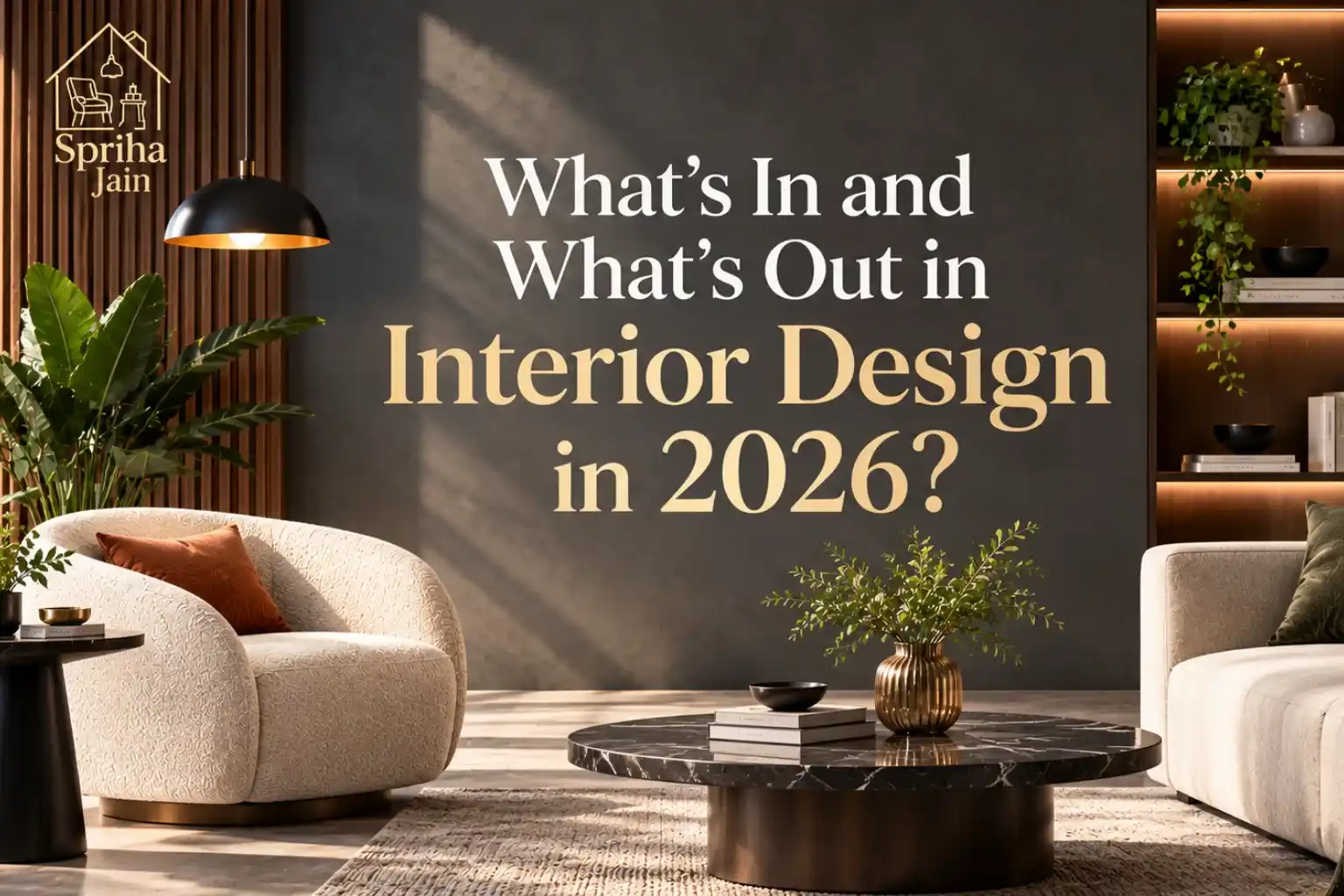
What’s In and What’s Out in Interior Design in 2026?
Interior design in 2026 is becoming warmer, more personal and more comfortable. Homeowners are moving away from spaces that look perfect but feel cold, and choosing designs that work better for everyday life. From natural materials and soft curves to layered lighting and meaningful décor, the focus is shifting towards homes that feel lived-in rather than overly styled.
At Spriha Jain Interiors, we believe a good home should reflect the people living in it. Trends can offer inspiration, but the right design should always match your lifestyle, space, comfort and personality.
So, what’s in and out in interior design trends 2026? From warm colours and natural textures to décor styles that are slowly losing their appeal, let’s take a closer look at the trends shaping homes this year.
What’s In for Interior Design in 2026?
1. Warm and Comfortable Minimalism
Minimalism is not disappearing, but it is changing.
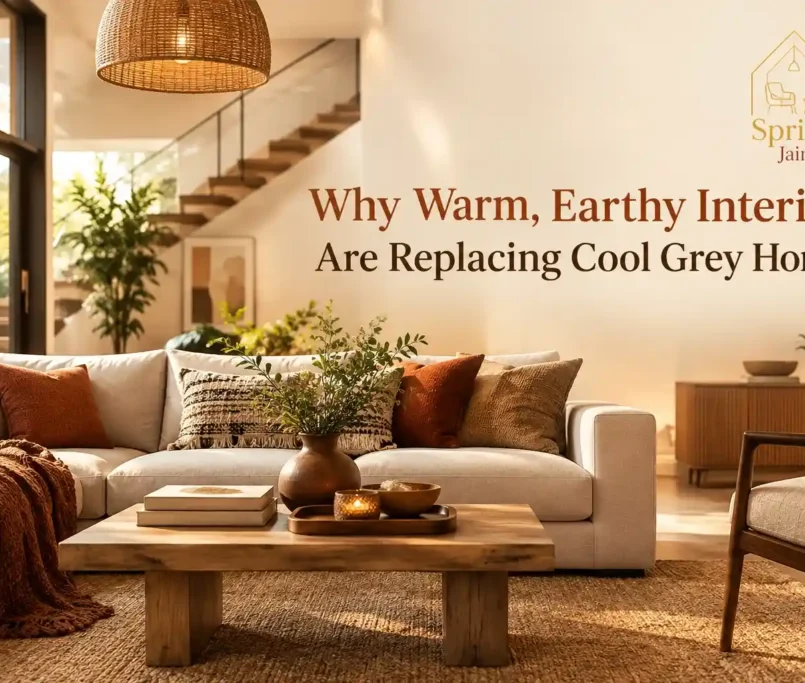
The cold white, grey and almost empty interiors that were popular for years are making way for warmer versions of minimalism. Think beige, sand, cream, terracotta, warm brown and soft olive instead of an all-white or grey palette.
The idea is simple: keep the space clean and uncluttered, but make it feel comfortable. Wooden furniture, soft fabrics, textured walls, rugs and warm lighting can make a minimalist home feel inviting without making it look busy.
This approach is especially useful for modern apartments where homeowners want a clean look without making the space feel empty.
2. Natural Materials and Textures
Natural materials are becoming an important part of 2026 interiors. Wood, stone, linen, cane, cotton and other tactile materials bring warmth and character into a room. Instead of relying only on colour to make a room interesting, designers are using texture.
A wooden console, stone coffee table, linen curtains or a textured wall can add depth without adding unnecessary decoration. This trend also works well in Indian homes because natural materials can blend beautifully with traditional details, modern furniture and handmade décor.
3. Curved Furniture and Softer Shapes
Straight lines have dominated modern interiors for years. In 2026, softer shapes are taking more space. Curved sofas, round coffee tables, arched mirrors, rounded chairs and softly shaped décor can make a room feel more relaxed and welcoming.
You do not need to redesign an entire room to follow this trend. Even adding one curved chair, round side table or arched mirror can soften an otherwise straight-lined space.
The key is balance. Too many curves can make a room look disconnected, so combine them with simple furniture and clean storage.
4. Layered Lighting
One ceiling light is no longer enough to create a beautiful and functional room. In 2026, lighting is being treated as an important part of the overall interior design. A combination of ceiling lights, pendant lights, floor lamps, table lamps and wall lights can create different moods throughout the day.
For example, brighter lighting can work well when you are cleaning or working, while softer lamps can make the living room feel relaxed in the evening. Layered lighting also helps highlight artwork, textured walls, furniture and other design elements.
5. Personal and Meaningful Décor
Homes are becoming less about matching everything and more about showing personality. Family photographs, artwork, travel memories, books, handmade pieces and objects with a story can make a space feel more personal.
Instead of buying every décor item from the same collection, mix old and new pieces. A modern sofa can sit beautifully with a vintage side table. A contemporary room can also include Indian artwork, brass décor or handmade accessories. The result feels more like a home and less like a showroom.
6. Smart Storage That Blends In
Storage will always matter, especially in urban homes. But in 2026, bulky storage that dominates the room is giving way to smarter, cleaner solutions. Built-in wardrobes, concealed cabinets, storage benches and furniture with hidden compartments can help keep everyday items out of sight.
The goal is not simply to add more cabinets. It is to make storage work naturally with the room. A well-planned home should have enough space for daily belongings without making every wall look like a cupboard.
What’s Out in Interior Design in 2026?
1. All-Grey Interiors
Grey is not completely out, but the heavy use of cool grey throughout an entire home is losing its appeal. Many current design directions are moving towards warmer neutrals, earthy colours and richer tones instead.
If your home already has grey furniture or flooring, you do not need to replace everything. Add warm wood, cream fabrics, earthy accessories and softer lighting to balance the look.
2. Overly Matching Furniture Sets
Buying a complete furniture set where the sofa, chairs, tables and storage all look exactly alike can make a room feel predictable.
In 2026, interiors are becoming more collected and personal. Try mixing materials, shapes and finishes while keeping a common colour story. This creates a more relaxed look without making the room feel messy.
3. Cluttered Decorative Walls
More décor does not always mean better décor. Walls filled with too many shelves, frames, decorative objects or unrelated pieces can make a room feel smaller and visually tiring.
Instead, choose a few pieces that deserve attention. A large artwork, textured wall, statement mirror or carefully styled shelf can often have more impact than a wall filled with small decorations.
4. Cold, Harsh Lighting
Bright white lighting everywhere can make even a beautifully designed home feel uncomfortable.
The 2026 approach is more layered and softer. Warm lighting, table lamps and decorative fixtures can make spaces feel more welcoming while still providing enough light for everyday activities.
5. Designing Only for Looks
One of the biggest changes in interior design is the growing importance of functionality. A beautiful sofa that blocks movement, a stylish table that is difficult to use or open shelving that collects dust may look good in photographs but may not work well in daily life.
Good interior design should consider how people actually live. Where do you keep your bags? Where do children play? How much kitchen storage do you need? Do you work from home? These questions should influence the design.
This is where Turnkey Interior Design Services can make the entire process more practical, as the design can be planned around everything from space and furniture to storage, finishes and everyday use.
How to Use 2026 Interior Trends Without Making Your Home Look Trendy
Following every trend can quickly make a home feel dated. Instead, choose trends that genuinely suit your lifestyle. Keep larger investments such as flooring, wardrobes, kitchens and sofas relatively timeless. Bring trends through easier-to-change elements such as cushions, artwork, lamps, rugs, curtains and décor.
For example, you can keep a simple neutral sofa and introduce 2026’s warmer palette through cushions, a rug and wooden side tables. The same approach works with wall design. Instead of covering every wall with a trendy finish, create one focal area and keep the remaining walls simple.
Spriha Jain Interiors also recommends thinking about the complete space rather than choosing individual elements separately. Furniture, lighting, colours, storage and décor should work together to create a home that feels cohesive and practical.
Conclusion
Interior design in 2026 is moving towards warmer, softer and more personal spaces. Natural materials, curved furniture, layered lighting, smart storage and meaningful décor are creating homes that feel comfortable instead of overly perfect. At the same time, cold grey palettes, excessive matching, clutter and purely decorative choices are becoming less popular.
For homeowners, the takeaway is simple: you do not have to follow every trend. Choose ideas that make your home more functional, comfortable and true to your personality.
At Spriha Jain Interiors, we can design every home around the way you actually live. Whether you are planning a complete home makeover or simply want to refresh a few spaces, thoughtful planning can help you create an interior that looks beautiful today and continues to feel right for years to come.
FAQs
1. Should I follow every interior design trend?
No, you do not need to follow every interior design trend. Choose trends that suit your lifestyle, home layout, comfort and budget. Keep permanent elements such as flooring, kitchens and wardrobes timeless, and introduce current trends through flexible elements such as lighting, rugs, artwork and décor.
2. How can I make my home look modern without renovating?
You can make your home look modern without a major renovation by updating lighting, furniture, rugs, curtains, cushions and décor. Use warm colours, natural textures, statement artwork, layered lighting and one or two curved furniture pieces to refresh your interiors while keeping the existing layout.
3. What are the biggest interior design trends for 2026?
The biggest interior design trends for 2026 include warm minimalism, natural materials, earthy colours, curved furniture, layered lighting, smart storage and personalised décor. Home interiors are becoming warmer and more functional, with greater focus on comfort, natural textures, practical layouts and spaces that reflect individual lifestyles.
4. Are curved furniture designs still trending?
Yes, curved furniture designs are still trending and remain an important interior design direction in 2026. Curved sofas, round coffee tables, arched mirrors and rounded chairs can make a room feel softer and more welcoming while balancing the straight lines commonly found in modern interiors.
5. Is minimalism still popular in 2026?
Yes, minimalism is still popular in 2026, but it is becoming warmer and more comfortable. Modern minimalist interiors now combine clean layouts with warm neutrals, natural wood, soft textures, practical storage and carefully selected décor, creating homes that feel simple without appearing empty or cold.