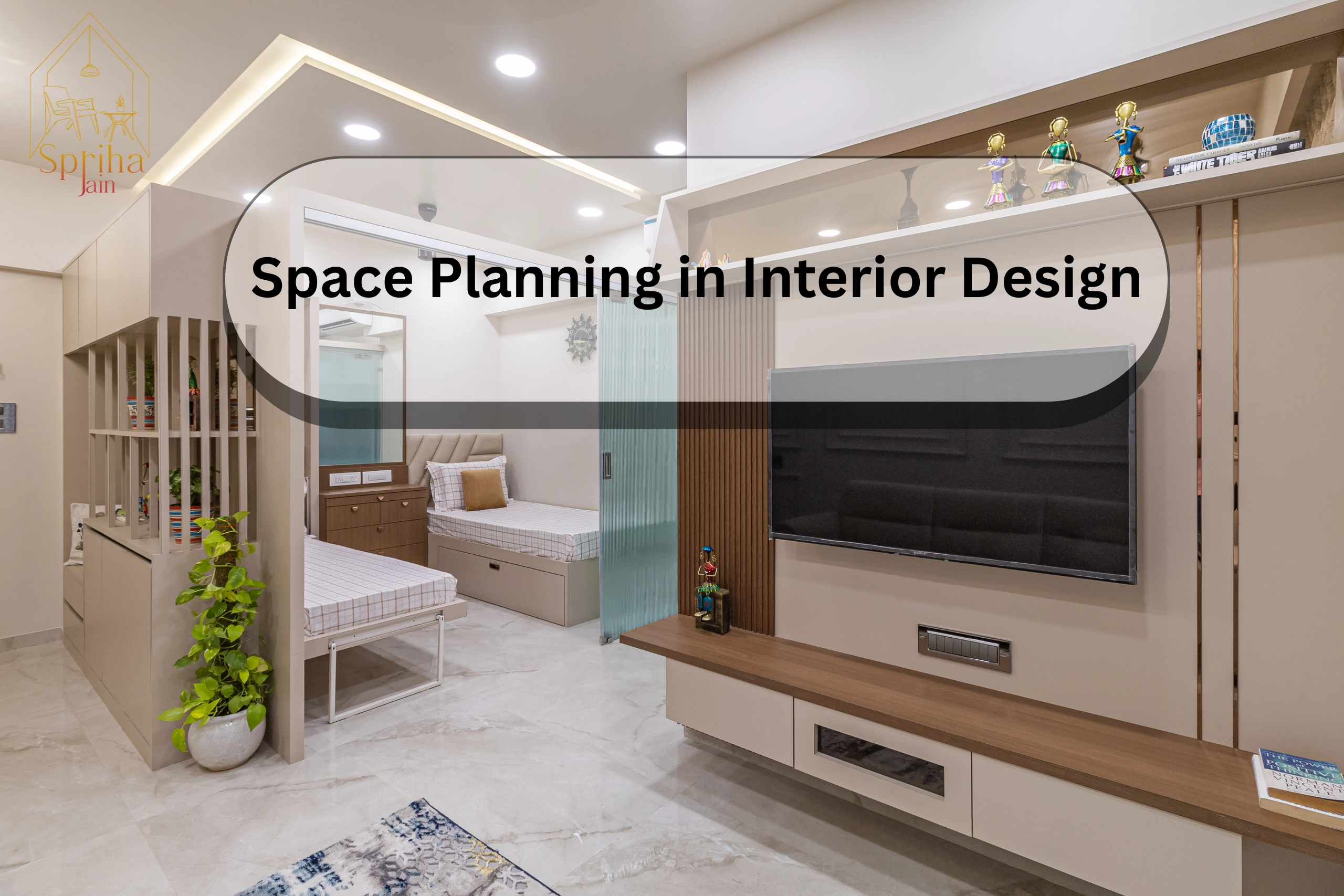
When people think about interior design, they often imagine beautiful furniture, elegant lights, and stylish colors. But behind every well-designed home, there is one important element that makes everything work better – space planning.
A beautiful home can still feel uncomfortable if the layout is wrong. A small apartment can feel spacious if every corner is planned properly. This is why many homeowners today look for the best interior designer in Mumbai to create homes that are not only attractive but also practical for daily living.
At spriha jain interiors, space planning is considered the foundation of a successful interior design project because every inch of your home should serve a purpose.
What Is Space Planning in Interior Design?
Space planning means arranging furniture, movement areas, storage, and functional zones in a way that makes a home feel balanced and easy to use.
It answers simple but important questions like:
- Where should the sofa go?
- How much walking space should be left?
- Can a dining table fit without making the room feel crowded?
- How can storage be added without reducing openness?
For example, in a 900 sq. ft. apartment, poor planning can make the home feel like only 700 sq. ft., while smart planning can make the same home feel much larger.
A designer studies:
- room dimensions
- natural light
- movement flow
- family lifestyle
- furniture sizes
Then they create a layout that improves comfort.
Why Is Space Planning So Important?
Many homeowners spend lakhs on interiors but still feel unhappy later because the home does not function well.
Good space planning helps in:
- Better movement
- More storage
- Better lighting
- Less clutter
- Improved comfort
Research in residential design shows that proper furniture placement can improve perceived room size by 15% to 20%, even without increasing the actual area.
How Do Designers Make Small Spaces Feel Bigger?
This is one of the most common questions homeowners ask.
A professional designer does not just decorate a space, they reshape how it feels.
Use multifunctional furniture
Examples:
- beds with storage drawers
- foldable dining tables
- wall-mounted study desks
- sofa-cum-beds
A storage bed alone can save nearly 25 to 35 sq. ft. of cupboard space.
Create visual openness
Designers use:
- mirrors
- light wall colors
- floating shelves
- glass partitions
These elements make a room feel larger.
Keep circulation clear
Experts usually maintain at least:
- 30 to 36 inches walking space in main areas
- 18 inches between coffee table and sofa
- 42 inches around dining tables for easy movement
These numbers may seem small, but they make a huge difference in daily comfort.
Can Space Planning Improve Daily Life?
Yes, and more than most people realize.
A badly planned home can create stress every day.
Imagine:
- kitchen drawers that cannot open fully
- wardrobes blocking windows
- beds placed too close to walls
- children having no study space
These small issues become daily frustrations.
Good planning improves:
- comfort
- convenience
- organization
- family interaction
For example, in a family of four living in a 2 BHK apartment, combining a dining area with a breakfast counter can free up nearly 40 sq. ft. for a study corner or extra storage.
That is why many families now prefer experienced home interior designers in Mumbai who understand how city homes need smart layouts.
Main Principles of Good Space Planning
Designers follow certain principles to make every room work well.
Function first
Every room should serve its purpose first.
For example:
- Bedroom = rest
- Kitchen = efficiency
- Living room = comfort
- Study = focus
Beauty comes after function.
Balance
Furniture should not all sit on one side of the room.
A balanced room feels more peaceful.
For example:
- large sofa on one side
- accent chair on the other
- center table in proportion
Scale and proportion
A large sofa in a tiny room makes the room feel smaller.
Designers choose furniture according to room size.
For example:
- small apartments need slim furniture
- high ceilings need taller elements
- narrow rooms need lighter pieces
Storage integration
Storage should blend into design.
Examples:
- TV units with cabinets
- staircase drawers
- window seating with storage
- hidden shoe units
Smart storage can increase usable space by 10% to 15%.
Room-by-Room Space Planning
Each room needs a different approach.
Living Room Planning
The living room should feel welcoming.
Designers focus on:
- seating arrangement
- TV viewing angle
- natural light
- movement paths
Example:
A 12×15 ft. living room can comfortably fit:
- 3-seater sofa
- 2 chairs
- center table
- TV unit
- side storage
Only if the layout is correct.
Bedroom Planning
Bedrooms need calmness.
Designers plan:
- bed placement
- wardrobe opening space
- side tables
- dressing area
Minimum ideal clearance:
- 24 inches around the bed
- 36 inches in front of wardrobes
This avoids a cramped feeling.
Kitchen Planning
The kitchen depends heavily on movement.
Designers use the “work triangle”:
Distance between these should be efficient.
Ideal total triangle distance:
13 to 26 feet
This reduces unnecessary movement while cooking.
How Technology Helps in Space Planning
Modern designers now use software to plan better.
Tools include:
- 2D floor plans
- 3D layouts
- virtual walkthroughs
- furniture simulations
Clients can see:
- how much space remains
- how furniture fits
- where movement feels tight
For example, moving a sofa just 8 inches in a digital plan can improve circulation significantly.
At spriha jain interiors, technology helps homeowners understand their space before execution starts, reducing costly mistakes.
When Should You Hire a Professional Designer?
You should consider professional help when:
- your home feels smaller than it is
- storage is always insufficient
- rooms feel uncomfortable
- renovation costs are high
- you want long-term value
Professional Interior designing services help avoid expensive errors and create a home that works for years.
In cities where every square foot matters, expert planning can save both money and space.
For example, a designer can help avoid layout mistakes that may cost ₹50,000 to ₹2 lakh to correct later.
How Spriha Jain Interiors Makes Every Inch Count
At spriha jain interiors, the goal is not just to design beautiful homes.
The goal is to create homes that feel:
- spacious
- practical
- elegant
- comfortable
Each project begins with understanding:
- family needs
- lifestyle habits
- storage requirements
- future changes
This ensures that every inch of the home supports better living.
Instead of simply filling rooms with furniture, the design focuses on creating balance between style and function.