Interior Design Trends That Will Still Look Good in 5 Years
Every few years, a new look takes over our Instagram feeds. Remember when every living room was grey on grey? Or when millennial pink showed up on sofas, walls, and even kitchen cabinets? A few years later, many of those homes looked dated, and their owners were already planning another makeover.
That’s the risk of chasing interior design trends without a filter. Your home isn’t a phone you upgrade every year. In Mumbai especially, a renovation means society permissions, dust, noise, and weeks of living out of cartons. You want a design that ages well, not one you’ll regret by 2030.
At Spriha Jain Interiors, we’ve designed homes, clinics, and retail stores across the city, and we keep noticing the same thing. Some ideas fade within a season. Others keep feeling right year after year. This guide is about the second kind.
Quick answer: The interior design trends most likely to still look good in five years are warm neutral palettes, natural materials, layered lighting, built-in multifunctional furniture, soft curves, indoor greenery, handcrafted details, and hidden technology. They last because they’re built on comfort and function, not novelty.
How Do You Tell a Lasting Trend From a Passing Fad?
A fad is usually about how something looks in a photo. A lasting trend is about how a space feels when you actually live in it. Not all interior design trends are created equal, so before you commit to anything expensive or hard to change, ask yourself three simple questions.
Ask These 3 Questions First
- Does it solve a real problem? Better storage, better light, or easier cleaning never goes out of style.
- Is it rooted in something older? Ideas borrowed from traditional homes, like jaali screens, courtyards, or natural materials, have already survived decades.
- Could you change it cheaply? If the answer is no, keep it classic.
If an idea passes all three, it’s probably worth the investment.
Timeless Interior Design Ideas Worth Investing In
1. Warm Neutrals and Earthy Colour Palettes
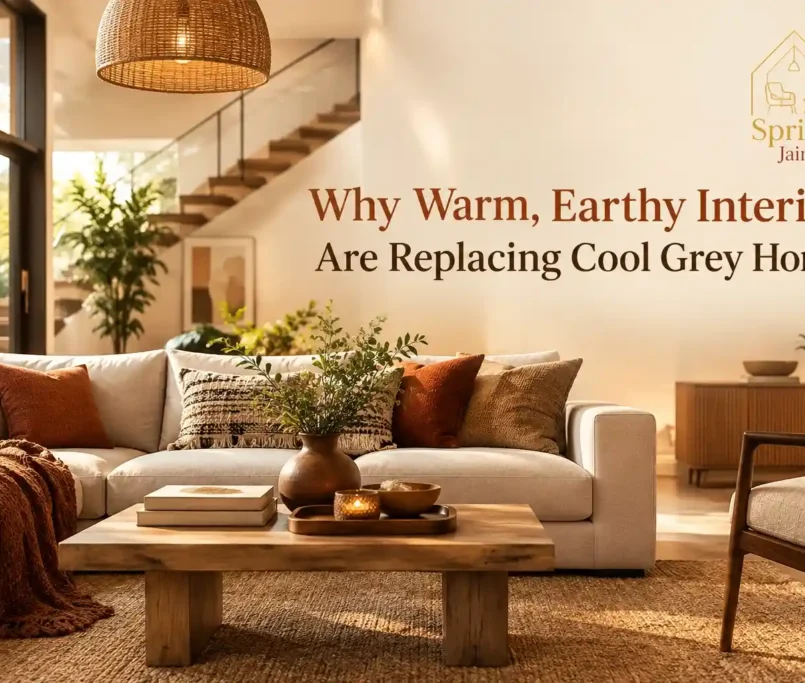
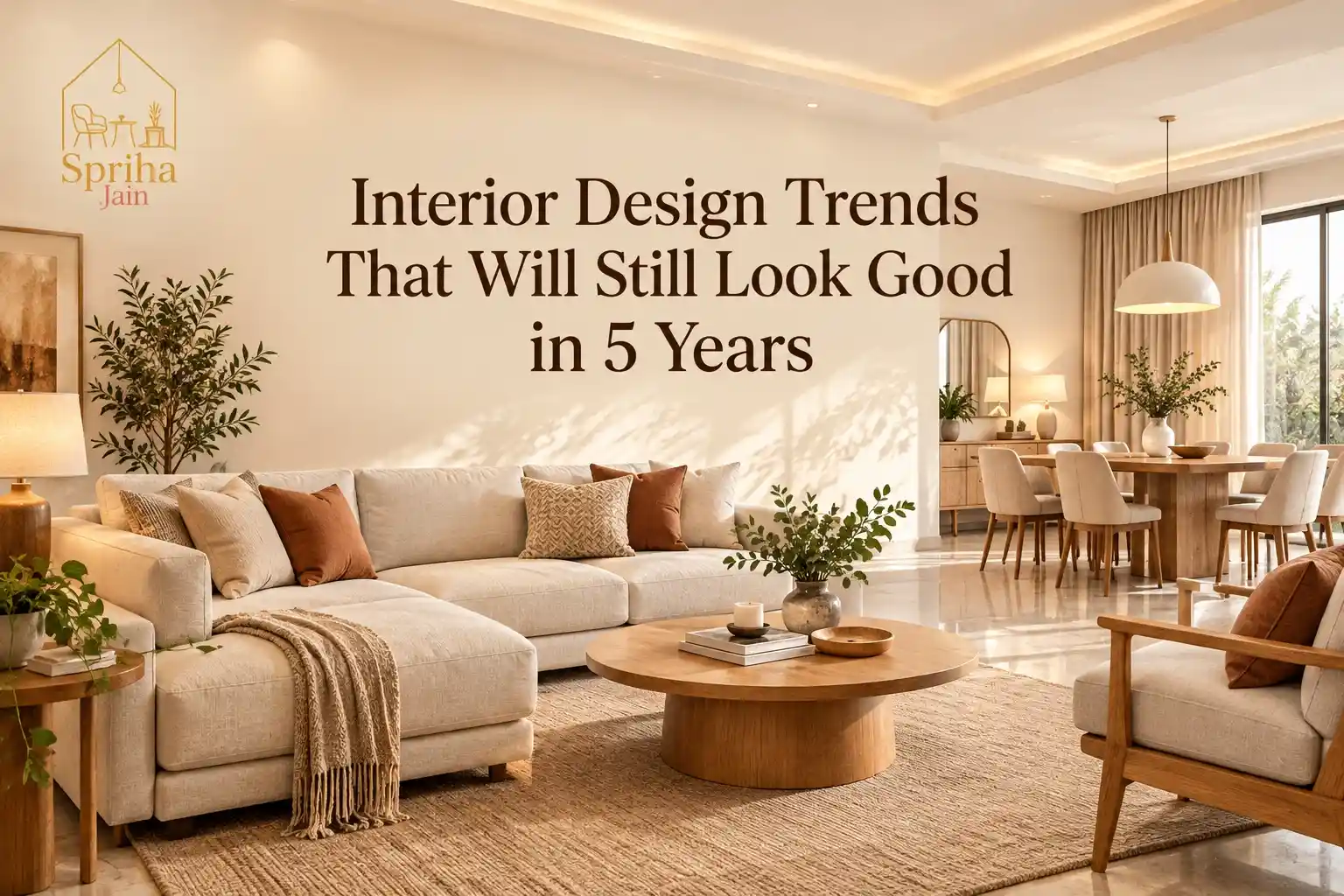
Cold whites and flat greys are slowly giving way to warmer shades like sand, terracotta, olive, mushroom, and soft cream. These colours feel calm without being boring, and they work with almost any furniture style.
Warm neutrals are also forgiving. You can switch cushions, rugs, or artwork every few years, and the room still feels pulled together. We often use them as a backdrop and add personality through one or two deeper accent shades.
2. Natural Materials With Real Texture
Wood, stone, cane, linen, jute, and lime plaster have been around for centuries, which is exactly why they won’t feel dated soon. They also age beautifully. A wooden dining table with a few marks tells a story; a high-gloss laminate with a scratch just looks damaged.
A Note for Mumbai Homes
Our humid monsoons can be tough on natural finishes. Choose seasoned or engineered wood, seal stone surfaces properly, and pick fabrics that breathe. A good designer will balance the look you love with materials that survive June to September.
3. Layered Lighting Instead of One Ceiling Light
A single bright tube light in the centre of the room is slowly becoming a thing of the past. Layered lighting combines ambient light for the whole room, task lighting for reading or cooking, and accent lighting to highlight art or textures.
Honestly, this is less a trend and more a better way to light a home. It makes small rooms feel bigger, adds warmth in the evening, and lets you change the mood with a switch.
4. Built-In, Multifunctional Furniture
Space in Mumbai is precious, and that won’t change in five years. Beds with hydraulic storage, foldable study desks, window seats with drawers, and floor-to-ceiling wardrobes stay useful no matter what’s fashionable.
As an Interior Designer in Andheri, we work on a lot of compact 1BHK and 2BHK flats. Clients there rarely ask for something trendy. They ask for more room to breathe, and custom built-ins are usually the answer.
5. Soft Curves and Rounded Edges
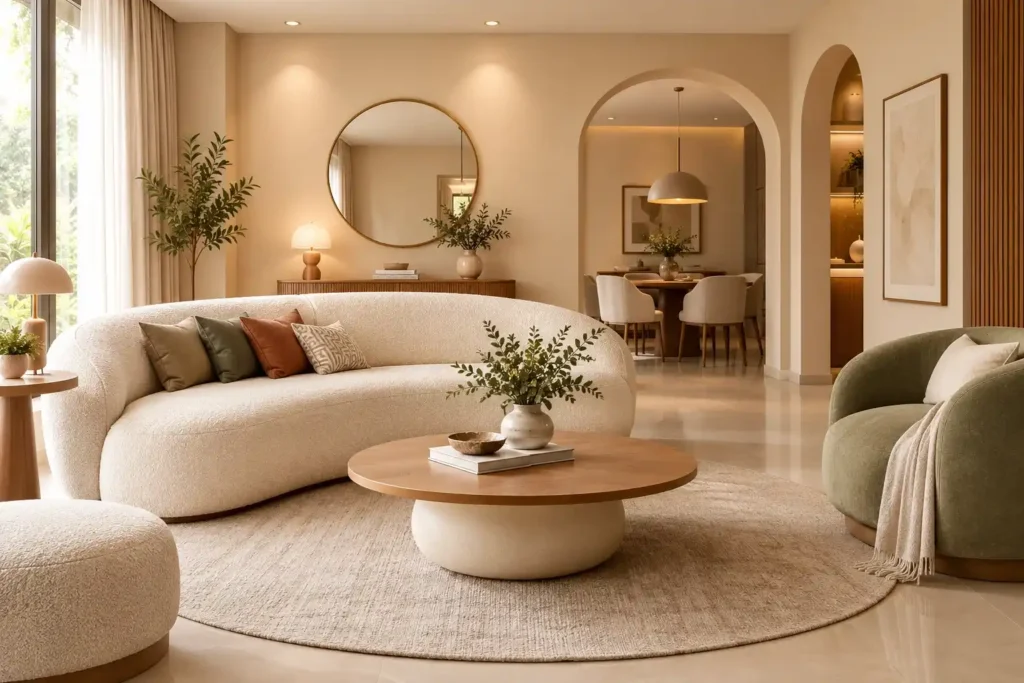
Curved sofas, arched doorways, round mirrors, and rounded table edges make a room feel relaxed and welcoming. They’re also practical in homes with young children or elderly parents.
Keep it balanced, though. One or two curved pieces feel elegant. A room where everything is round starts to look like a theme, and themes date quickly.
6. Bringing Nature Indoors
Biophilic design simply means connecting your home with nature through plants, natural light, greenery views, and organic materials. After years of spending more time indoors, most people now see this as essential rather than decorative.
Even a small balcony garden or a cluster of planters near a window can lift an entire room.
7. Handcrafted and Indian Artisan Details
With mass-produced decor everywhere, handmade pieces stand out more than ever. Hand-painted walls, block-printed fabrics, brass accents, carved wood panels, and handwoven dhurries bring character that a catalogue simply can’t copy. This shift towards meaningful interiors is one we see in almost every project now.
These pieces connect your home to India’s craft traditions, which gives them a lasting quality. A hand-carved console will look just as lovely in 2031 as it does today.
8. Technology You Don’t See
Smart lighting, concealed wiring, built-in charging points, and motorised curtains are becoming standard. The lasting version of this trend keeps tech hidden. Visible gadgets go out of date fast, but a clean wall with well-planned electrical points never will.
Trends You May Want to Skip or Use Sparingly
Some interior design trends look great online but don’t hold up in real life. We’d suggest caution with:
- Bold, all-over wallpaper in main living areas
- “Colour of the year” shades on large surfaces
- Heavily themed rooms built around one era or style
- High-gloss finishes everywhere, which show every fingerprint
If you love these, use them in small, easy-to-change doses, like a powder room or a single feature wall. For a fuller picture, read our guide on what’s in and what’s out in interior design in 2026.
Why Expert Guidance Makes Timeless Design Easier
Knowing what will last is part instinct and part experience. It comes from seeing which homes still feel fresh years after handover and which ones get redone.
Our studio has designed spaces for actors, a film director, a celebrity stylist, doctors, and business owners. Working as a celebrity interior designer in Mumbai has taught us something surprising: even the most fashion-forward clients want homes that feel personal and calm, not copies of a magazine spread.
Final Thoughts
Interior design trends will keep changing, and that’s part of the fun. But the homes that age best are built on comfort, quality materials, good light, and smart planning. Keep the big, expensive elements classic and add personality through things you can easily swap.
Spriha Jain Interiors has built her name as a celebrity interior designer in Mumbai by creating homes that feel personal and outlast the latest fad, for celebrities and families alike.
If you’re searching for a trusted Interior Designer in Andheri, Kandivali, or anywhere in the western suburbs, we’d love to hear from you.
FAQs
1. Which interior design trends will last the next five years?
Warm neutral colours, natural materials, layered lighting, built-in storage, soft curves, indoor plants, handcrafted Indian details and hidden smart technology are likely to last. They focus on comfort and function, so they don’t date quickly.
2. How can I make my home look timeless without it feeling boring?
Keep large, costly elements like flooring, cabinetry and walls in classic, warm tones. Then add personality through cushions, art, rugs, plants and lighting. These are easy to change whenever your taste evolves.
3. Are natural materials suitable for Mumbai’s humid climate?
Yes, if chosen carefully. Use seasoned or engineered wood, properly sealed stone and breathable fabrics like linen and cotton. Good ventilation and regular care help natural materials stay beautiful through Mumbai’s long monsoon season.
4. Why should I hire a professional for a long-lasting interior design?
An experienced designer knows which ideas age well and which fade fast. They plan storage, lighting and materials around your lifestyle, helping you avoid costly mistakes and frequent renovations down the line.
5. How often should I update my home interiors?
With a timeless base, major renovations can last 10 to 15 years. Smaller updates like paint, soft furnishings, lighting and decor can be refreshed every two to four years to keep the space feeling current.