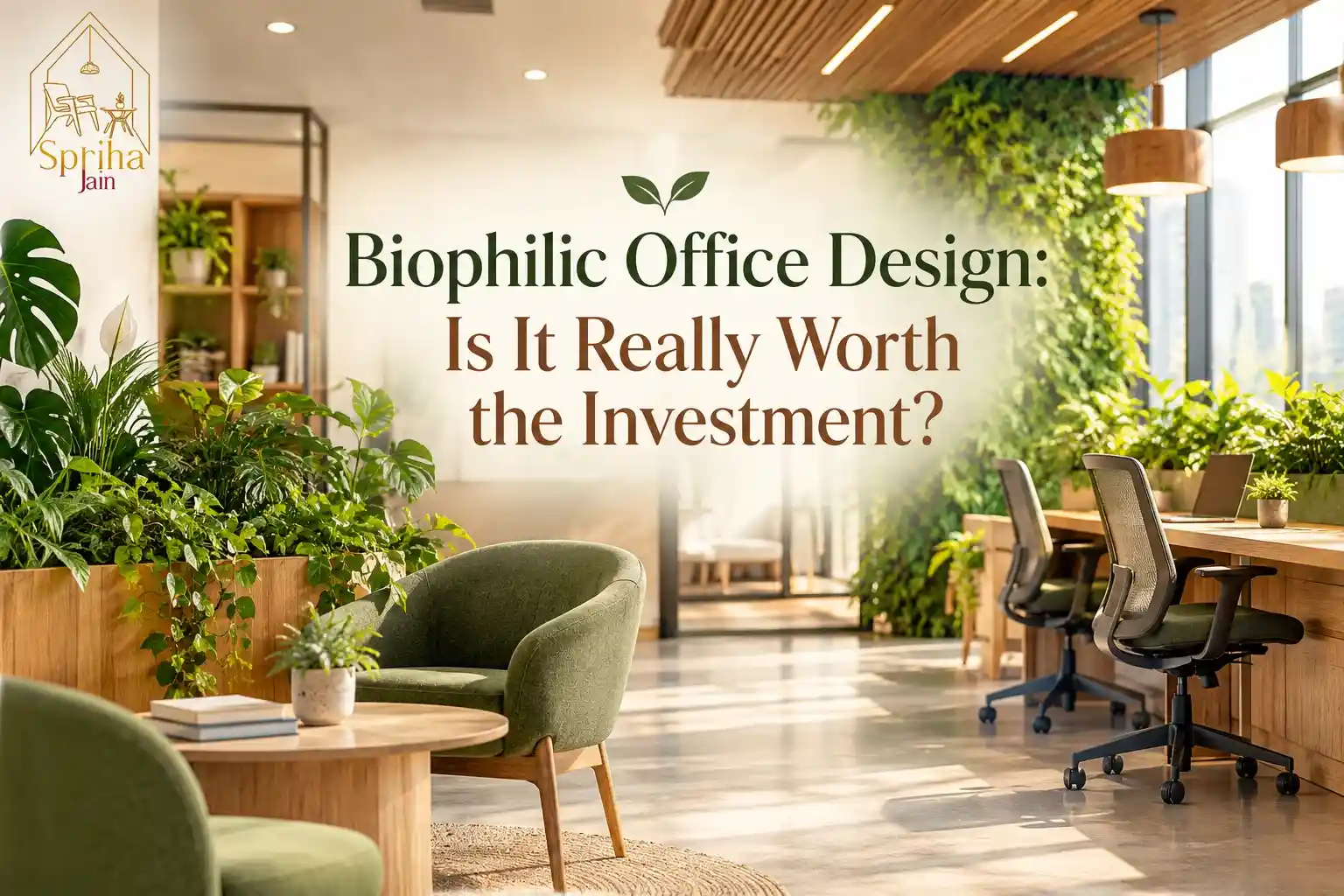
Biophilic Office Design: Is It Really Worth the Investment?
Walk into most offices in Mumbai and you’ll see a familiar picture: sealed glass windows, rows of identical desks, harsh tube lights, and one lonely plant in the corner that nobody remembers to water. Now imagine a workspace where daylight falls softly across the desks, greenery sits at eye level, and the materials around you feel warm instead of clinical. Which one would you rather spend nine hours a day in?
That second space is what biophilic office design is all about. The term has become popular lately, and popular terms deserve some healthy doubt. Business owners often ask us at Spriha Jain Interiors a fair question: is it actually worth the money, or is it just a trend that photographs well? Let’s look at it honestly.
What Is Biophilic Office Design?
“Biophilia” simply means a love for living things. Biologist Edward O. Wilson popularised the idea that humans carry an inborn need to connect with nature. That makes sense when you think about it. We spent most of our history outdoors, not under false ceilings and LED panels.
Biophilic office design brings that connection back into the workplace. It isn’t about turning your office into a jungle. It’s about weaving nature into how a space looks, feels and works.
The Three Elements of Biophilic Design
- Direct Contact With Nature: This is the most obvious layer. It includes real plants, natural daylight, fresh air, water features and outdoor views.
- Natural Materials and Patterns: When live greenery isn’t practical, nature can show up through wood, stone, cane, jute, earthy colours and organic shapes in furniture or artwork.
- Nature-Inspired Spaces: This one is subtler and depends on the layout. It covers open zones that feel airy, cosy corners that feel sheltered, and long sightlines that let tired eyes rest.
Why Biophilic Office Design Matters in Modern Workplaces
1. Less Stress, Better Wellbeing
Office stress is real, and the environment plays a bigger part in it than most people think. Spaces with greenery and daylight tend to feel calmer. People step away from their screens more naturally and come back refreshed rather than drained.
2. A Measurable Boost in Productivity
The case is backed by research. The widely cited Human Spaces report (2015), led by organisational psychologist Sir Cary Cooper, found that people working in environments with natural elements reported about 15% higher wellbeing, 6% higher productivity and 15% more creativity. Those aren’t miracle numbers, but across a whole team they add up. That is a strong argument for biophilic office design.
3. Healthier, More Comfortable Air
Plants make a space feel fresher, but plants alone won’t clean the air of a busy office. Good ventilation does most of that work. Greenery and fresh air together still create a noticeably more comfortable place to work.
4. Attracting and Keeping Good People
With hybrid work now common, your office has to be worth the commute. A nature-inspired space shows employees and clients that you care about how people feel at work. That helps when you’re hiring, and it helps even more when you’re trying to keep good people.
Breaking Down the Investment
The cost of biophilic office design depends on your space, your goals and how far you want to go. You don’t have to do it all at once.
1. Small Steps With Big Impact
You can start with indoor plants, a few natural textures, warmer lighting and nature-themed artwork. These changes fit most budgets and can change the mood of a room within days.
2. Mid-Range Upgrades
The next level includes vertical gardens, wooden ceiling or wall panels, planter partitions and natural-fibre furniture. An experienced commercial interior designer in Borivali can help you choose materials that handle Mumbai’s humidity and daily wear, so you won’t need to replace them in two years.
3. Bigger Structural Changes
Some projects involve enlarging windows, adding skylights, creating indoor courtyards or reworking the layout for better airflow. These changes affect the building itself, so involving an architect in Kandivali early can save you from expensive corrections later.
So, Is Biophilic Office Design Really Worth It?
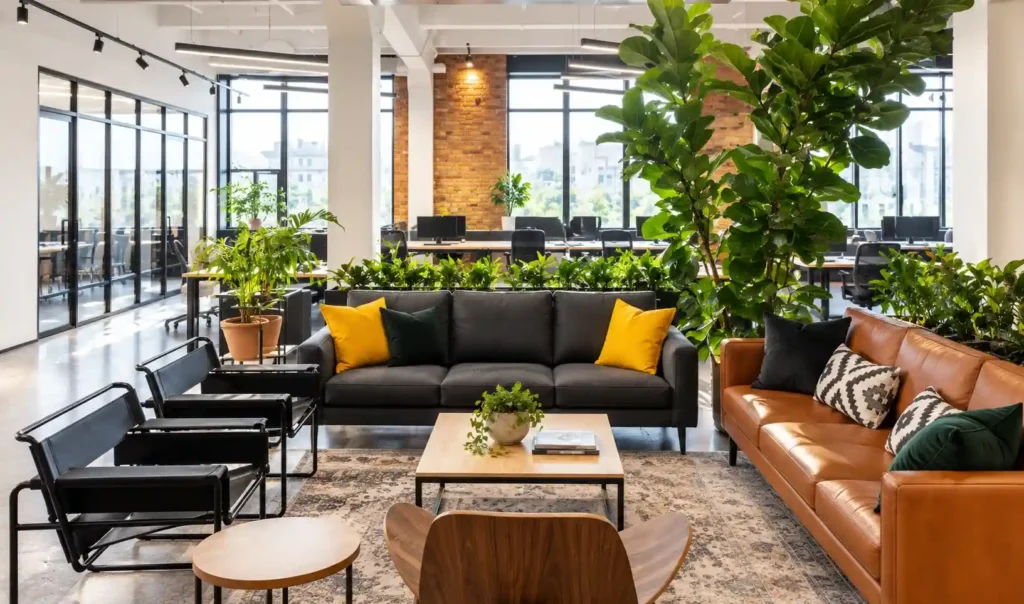
A real estate rule of thumb called the 3-30-300 rule explains the economics simply. For every 3 units a company spends on utilities, it spends roughly 30 on rent and 300 on its people. Your team is by far your biggest cost. If a better environment improves focus even slightly, or keeps one valued employee from leaving, the design often pays for itself.
When It May Not Pay Off
To be fair, biophilic office design can fail. Plants placed in dark corners die quickly. Water features without upkeep start to smell. A green office that looks great on day one but has no maintenance plan becomes a burden. The investment only works when it’s planned carefully from the start, not added as decoration at the end.
Making Biophilic Office Design Work in Mumbai
1. Working Around Limited Daylight
Many commercial buildings in Mumbai’s western suburbs have deep floor plates and few windows. Smart planning can still bring light inside, using glass partitions, light-coloured finishes and desks placed closer to windows. A Best Interior Designer in Kandivali who knows local building types can get the most daylight out of your existing structure.
2. Picking Plants That Survive
Snake plants, ZZ plants, money plants, areca palms and peace lilies cope well with Mumbai’s humidity. Choose each plant for the light it will actually get, not for the spot where it looks best.
3. Planning for Maintenance
Decide early who will water, prune and replace plants. Many offices use a simple monthly plant care service, which is a small cost that protects the whole investment.
How to Get Started With the Right Team
Start with an honest look at your current space. Notice where the light comes in, where people gather, and which areas feel dull or stuffy. Then set your priorities and plan a budget in phases.
If your office is in the western suburbs, a commercial interior designer in Borivali can make the process much smoother. At Spriha Jain Interiors, we plan biophilic elements around how your team actually works, so the space looks beautiful and stays practical.
For projects involving layout changes, facade work or daylight planning, bring in an architect in Kandivali alongside the interior team so everything is coordinated from the start.
Final Thoughts
Biophilic office design is not a magic fix, and it isn’t a passing trend either. Done well, it creates a workplace people genuinely enjoy, and you’ll see that in their energy, focus and loyalty. Start small, plan for upkeep, and build from there.
Ready to bring nature into your workspace? Talk to Spriha Jain Interiors, a trusted commercial interior designer, and let’s create an office your team will love walking into. Book a consultation today.
FAQs
1. What is biophilic office design?
Biophilic office design is an approach that brings nature into the workplace through plants, daylight, natural materials, earthy colours and nature-inspired layouts. Its goal is to create offices that feel calmer, healthier and more comfortable for the people working there.
2. Is biophilic office design expensive?
Not necessarily. You can start small with indoor plants, natural textures and better lighting, then scale up over time. Costs depend on office size and scope, so a phased plan helps you control spending while still seeing benefits.
3. Does biophilic design improve employee productivity?
Research suggests it can. The Human Spaces report found people working in spaces with natural elements reported higher wellbeing, productivity and creativity. Results vary by office, but many teams notice a calmer, more focused atmosphere.
4. Which plants are best for offices in Mumbai?
Low-maintenance plants such as snake plant, ZZ plant, money plant (pothos), areca palm and peace lily handle Mumbai’s humidity and indoor conditions well. Choose species based on how much natural light each area of your office gets.
5. Can biophilic design work in a small office?
Yes. Small offices benefit from vertical gardens, hanging planters, wooden finishes, nature-themed artwork and well-placed mirrors that bounce daylight around. Even a few thoughtful touches can make a compact workspace feel more open and relaxed.