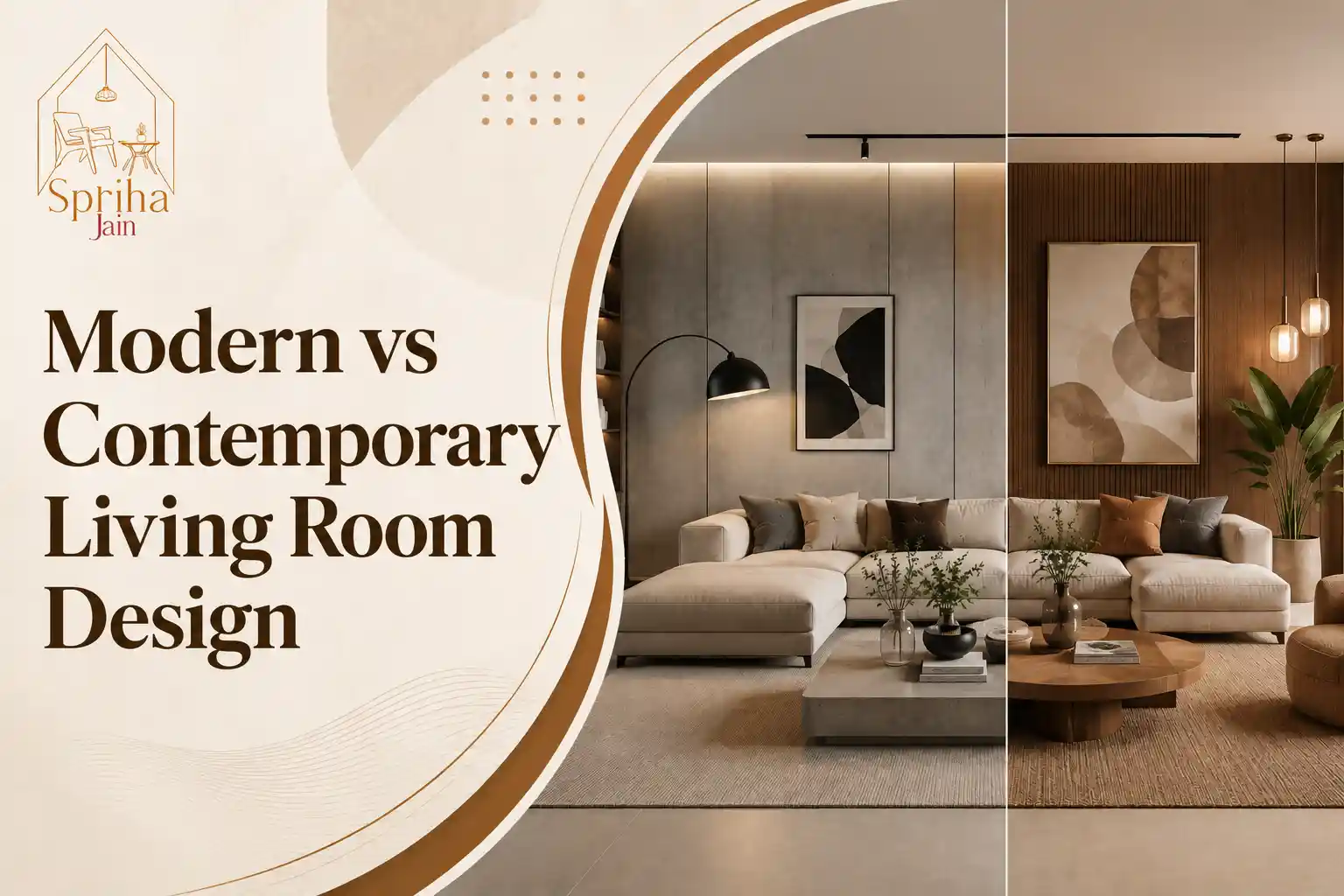
When planning a living room, two words often come up: modern and contemporary. They sound almost identical, and many homeowners use them interchangeably. But when it comes to interior design, they actually describe two different approaches.
So, how do you know which one is right for your home?
In this blog, we’ll compare modern vs contemporary living room design based on furniture, colours, materials, décor and overall look, so you can understand the difference and choose a style that suits your space and lifestyle.
At Spriha Jain Interiors, we believe a well-designed living room should be stylish, comfortable, and practical. Let’s look at what really sets these two popular design styles apart.
What Is Modern Living Room Design?
Modern interior design is connected to the Modernist design movement of the early to mid-20th century. It focuses strongly on simplicity, function, clean lines and purposeful furniture.
A modern living room usually feels organised and uncluttered. There is a clear purpose behind the furniture and décor rather than an attempt to fill every empty corner.
Key Features of a Modern Living Room
- Clean, straight lines
- Simple furniture shapes
- Neutral and earthy colours
- Natural materials such as wood and stone
- Minimal decoration
- Functional furniture
- Open and uncluttered layouts
- Carefully selected statement pieces
For example, imagine a living room with a low-profile sofa, wooden furniture, a simple coffee table, warm neutral walls and very little unnecessary décor. That is closer to a modern living room. The beauty of modern design is that it can feel stylish without relying heavily on passing trends.
What Is Contemporary Living Room Design?
Contemporary design is different because “contemporary” essentially means what is current or happening now. Unlike modern design, it does not belong to one fixed historical period.
It can borrow ideas from modern, minimalist, industrial, Scandinavian and other design styles. As preferences change, contemporary interiors can change with them.
Key Features of a Contemporary Living Room
- Current furniture and décor trends
- A mix of materials and textures
- Neutral colours with occasional bold accents
- Curved and sculptural furniture
- Statement lighting
- Large artwork
- Flexible furniture arrangements
- A balance between comfort and visual appeal
For instance, a contemporary living room may combine a curved sofa, textured rug, glass coffee table, statement pendant light and a bold piece of artwork. It does not have to follow one strict formula.
Modern vs Contemporary Living Room: Key Differences
The two styles overlap, which is why the confusion is understandable. However, there are some easy ways to tell them apart.
Feature | Modern Living Room | Contemporary Living Room |
Design period | Based on a specific design movement | Reflects current design |
Overall look | Clean and structured | Flexible and evolving |
Furniture | Simple, functional forms | Can include curves and sculptural forms |
Colours | Neutral, earthy and warm | Neutrals with changing accent colours |
Materials | Wood, leather, stone and metal | Mix of glass, metal, wood, textiles and more |
Décor | Minimal and purposeful | More freedom to experiment |
Trends | Less dependent on trends | More responsive to current trends |
Personality | Calm and timeless | Fresh and expressive |
The important thing is not to treat one as “better” than the other. They simply create different moods and suit different homeowners.
Which Style Is Better for a Small Living Room?
Both can work beautifully in a small living room. For a modern approach, focus on simple furniture, clean lines, light colours, and minimal décor. This helps maintain a sense of openness. For a contemporary approach, choose furniture that serves more than one purpose and avoid filling the room with too many trendy pieces.
This is particularly useful in city apartments where every square foot matters. Good space planning can make a compact living room feel comfortable rather than cramped. Spriha Jain Interiors offers residential interior design solutions focused on creating stylish, space-efficient homes without unnecessary clutter.
Modern or Contemporary: Which One Should You Choose?
The answer depends less on what is trending and more on how you want your home to feel.
Choose Modern If You:
- Prefer a clean and organised home
- Love simple furniture
- Like neutral and earthy colours
- Want a timeless appearance
- Prefer less decoration
- Value function over excessive styling
Choose Contemporary If You:
- Like experimenting with current trends
- Enjoy bold artwork or statement lighting
- Love curves and unusual furniture shapes
- Want to mix textures
- Prefer a more flexible design
- Enjoy updating your interiors over time
And here is the good news: you do not have to choose only one.
Can You Mix Modern and Contemporary Design?
Absolutely. In fact, combining the two can create a very comfortable and sophisticated living room. Think of modern design as your foundation and contemporary elements as the layers that bring personality to the room.
For example, you could have:
- A simple modern sofa
- A contemporary curved coffee table
- Warm wooden flooring
- A bold modern artwork
- Sculptural lighting
- Soft textured cushions
The result can feel fresh without becoming overly trend-driven. This kind of balanced approach is already reflected in Spriha Jain’s philosophy of creating personalised spaces rather than following one fixed design formula.
Common Mistakes to Avoid When Designing a Living Room
- Following Trends Blindly: A living room should work for your lifestyle, not just look like a trending social media post.
- Buying Furniture Without Measuring: A beautiful sofa can still look wrong if it overwhelms the room. Always consider dimensions and circulation before buying.
- Using Too Many Statement Pieces: If everything is trying to grab attention, nothing becomes the focal point. Pick one or two standout elements.
- Forgetting Comfort: Your living room is meant to be lived in. Comfortable seating, practical storage and suitable lighting matter just as much as appearance.
- Mixing Styles Without a Plan: Modern and contemporary pieces can work together, but there should be some connection through colour, material, shape or scale.
Conclusion
So, what is the difference between modern and contemporary living room design? Modern design is more structured, timeless and rooted in a particular design movement. Contemporary design is more flexible, current and willing to evolve with changing tastes.
If you want a living room that feels calm, clean and timeless, modern design may be the better choice. If you enjoy experimenting with textures, shapes and current trends, contemporary design may suit you more. But if you cannot decide, don’t worry. A thoughtfully planned combination of both can give you the best of both worlds.
At Spriha Jain Interiors, the focus is not simply on choosing a design label. It is about understanding your lifestyle, space, preferences and everyday needs, then creating a living room that feels like yours. Good interior design should look beautiful, but it should also make living at home easier and more enjoyable.
Ready to create a living room that fits your style and lifestyle? Connect with Spriha Jain Interiors to discuss your residential interior design project and bring your vision to life.
FAQs
1. Is modern and contemporary living room design the same?
No. Modern design is based on a specific historical design movement, while contemporary design reflects current styles and trends. They can look similar, but contemporary interiors are generally more flexible and change as design preferences evolve.
2. Modern or contemporary living room design: Which is better?
Neither style is universally better. Modern design suits homeowners who prefer clean, timeless interiors, while contemporary design works well for people who enjoy evolving trends, varied textures, curves and more experimental décor.
3. Is modern design more timeless than contemporary design?
Generally, modern design has a more consistent appearance because it is rooted in an established design movement. Contemporary design changes with current preferences, so some elements may eventually feel dated as trends evolve.
4. What colours work for modern living rooms?
Modern living rooms commonly use neutral and earthy shades such as beige, cream, white, brown, grey and black. Natural wood tones can add warmth and prevent a neutral palette from feeling flat.
5. How do I decide which living room style suits my home?
Start with your lifestyle, existing architecture, preferred colours, furniture habits and budget. Look at styles you naturally save or admire, then choose elements that you can realistically enjoy every day.