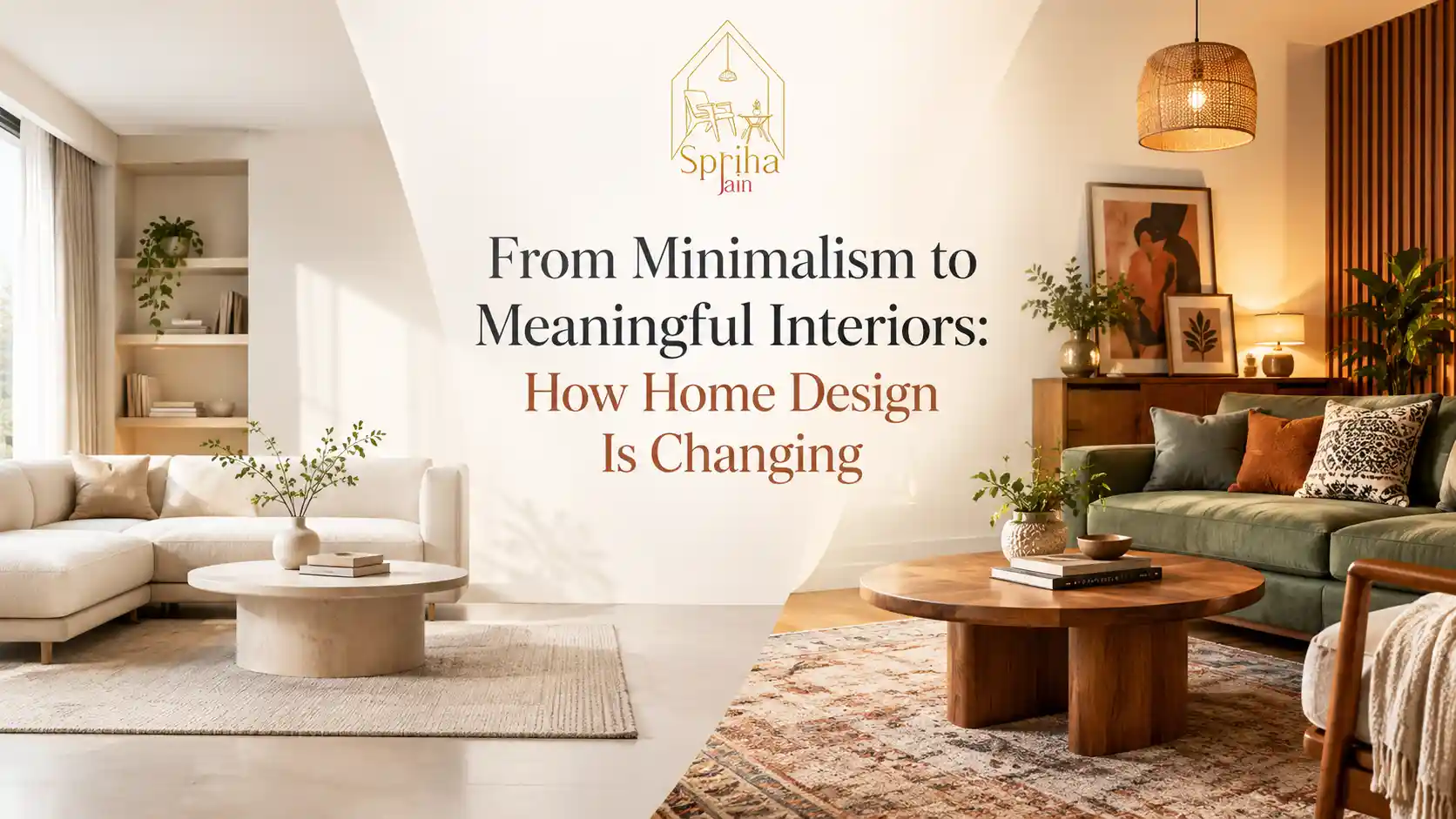
From Minimalism to Meaningful Interiors: How Home Design Is Changing
If your home looks beautifully curated but still feels a little… not yours, you are not alone. Home design is moving beyond the idea that a successful interior must be perfectly minimal, neutral and clutter-free. In 2026, homeowners are increasingly looking for spaces that combine functionality, comfort, personality, memories and long-term livability.
The change does not mean minimalism is disappearing. Instead, it is evolving. Clean layouts and thoughtful storage still matter, but they are being balanced with meaningful objects, warmer materials, tactile textures, personal collections, flexible spaces and design choices that reflect how people actually live.
Recent Houzz research points in the same direction: homeowners and design professionals are showing stronger interest in warm palettes, natural materials, personalized details, wellness-oriented spaces and interiors that feel collected rather than overly coordinated.
For Spriha Jain, this shift represents an important evolution in residential interior design: design the home around the person first and the trend second. A thoughtfully designed home should not simply look beautiful in photographs; it should feel comfortable, functional and genuinely connected to the people who live there.
What Does “Meaningful Interior Design” Mean?
Meaningful interior design is an approach where a home’s layout, materials, colours, furniture and décor are selected not only for visual appeal but also for their connection to the homeowner’s lifestyle, memories, preferences and everyday routines.
A meaningful home might include:
- A dining table where the family regularly gathers
- Artwork connected to a memorable trip
- A reading corner designed around someone’s daily ritual
- Furniture inherited from parents or grandparents
- Storage planned around the family’s actual habits
- Materials selected for durability and sensory comfort
- Lighting designed differently for working, relaxing and entertaining
The goal isn’t to fill a home with possessions. It is to make the right things matter.
This is an important distinction. Meaningful design can still be minimalist. A room with ten carefully chosen objects can feel more personal than a room with fifty decorative pieces.
Why are homes moving beyond strict minimalism?
The biggest change is that homeowners are becoming less interested in designing a home simply to look “finished.” They want spaces that support their routines and tell their stories.
Houzz’s 2026 design research describes growing interest in warm, layered and personalized interiors, including natural materials, tactile finishes and details with character. Its research also highlights a move toward homes designed around longevity, wellness and individual lifestyles.
Several factors are contributing to this shift.
1. People want homes that reflect their identity
Social media has made certain interior styles incredibly recognisable. The downside is that a home can begin to resemble hundreds of other homes seen online.
The response is greater individuality. Instead of asking, “What style is trending?”, homeowners are increasingly asking: “What feels right for me?”
That could mean combining contemporary furniture with an antique cabinet, adding artwork from travels, unexpectedly using a favourite colour or designing a space around a hobby.
2. Function is becoming as important as aesthetics
A beautiful living room that doesn’t work for your family is not successful interior design.
Today’s homes often need to accommodate multiple activities: working, studying, entertaining, relaxing, exercising and spending time together.
That makes space planning increasingly important.
For example, a compact Mumbai apartment may benefit more from intelligently designed storage, flexible furniture and clear circulation than from adding another decorative feature.
3. Wellness is becoming part of residential design
A meaningful home should support physical and mental comfort.
That can involve practical decisions such as:
- Better natural ventilation
- Comfortable lighting
- Reduced visual clutter
- Ergonomic furniture
- Accessible movement paths
- Indoor greenery
- Quiet corners
- Appropriate privacy
- Materials selected with indoor air quality in mind
The World Health Organization recognises housing conditions as an important determinant of health and highlights factors including indoor air quality, temperature, crowding, accessibility, dampness and safety.
So wellness-focused interior design isn’t simply about creating a “spa-like” bathroom. It begins with how the home performs every day.
What design elements make a home feel more personal?
Meaning does not require an expensive renovation. Often, it comes from decisions made at the smaller scale.
1. Personal objects with a story
Instead of buying décor simply because it matches a mood board, consider objects that have genuine significance.
A ceramic piece made by a local artist, an old family photograph, a travel souvenir or a book collection can introduce a sense of history that mass-produced décor cannot easily replicate.
2. Layered lighting
Lighting strongly influences how a room feels at different times of day.
Instead of depending entirely on one ceiling fixture, consider a combination of:
- Ambient lighting
- Task lighting
- Accent lighting
- Decorative fixtures
- Natural daylight
The U.S. Department of Energy notes that effective daylighting can reduce dependence on artificial lighting when windows and other daylight sources are strategically planned.
For a home, the bigger design question is not simply “How bright should this room be?” but “What activities should this room support?”
3. Tactile materials
Texture gives a room depth without requiring visual clutter.
Depending on the style, this might include:
- Natural wood
- Stone
- Linen
- Handcrafted tiles
- Textured plaster
- Cane or woven materials
- Matte finishes
- Soft upholstery
Houzz’s 2026 emerging trends research found increased interest in tactile materials and nature-inspired textures, alongside rising searches for biophilic design and finishes such as Venetian plaster and limewash.
4. Colour with emotional relevance
A meaningful colour scheme doesn’t need to follow a prescribed palette.
Perhaps a homeowner loves earthy greens because they feel connected to nature. Someone else may prefer warm terracotta because it reminds them of family holidays. Another person might want a deep blue study because it creates the atmosphere they associate with reading.
The colour becomes more than decoration. It becomes part of the home’s story.
How can you create a meaningful interior without making it cluttered?
The biggest mistake is confusing personalization with accumulation. A meaningful interior still needs editing.
Try this five-step approach:
- Start with your routines: List what you actually do at home: work, cook, entertain, read, exercise, host family or relax.
- Identify what matters: Choose objects, colours, materials and experiences that genuinely have meaning for you.
- Build a functional foundation: Plan circulation, storage, furniture proportions, lighting and electrical requirements before adding décor.
- Layer personality gradually: Add artwork, textiles, plants, books, photographs and objects selectively.
- Leave some breathing room: Not every wall, shelf or corner needs to be filled.
This approach is particularly valuable in compact homes, where every design decision affects both appearance and usability.
What role does sustainability play in meaningful home design?
Sustainable interior design is increasingly connected with the idea of designing for longevity rather than constant replacement.
A durable sofa, adaptable storage system or timeless material may make more sense than choosing something solely because it is currently fashionable.
There is also a health consideration when selecting interior materials. The U.S. Environmental Protection Agency notes that VOCs can be emitted by paints, finishes, building materials and furnishings, and recommends ventilation and reducing exposure to products that emit VOCs during renovation.
This doesn’t mean every “natural” or “low-VOC” label automatically makes a product safer, the EPA specifically cautions that “low VOC” terminology does not by itself guarantee that a product is safer indoors.
For homeowners, the better approach is to ask designers and suppliers about material composition, emissions, durability, maintenance and appropriate ventilation, rather than relying on marketing language alone.
What are the biggest home design trends shaping 2026?
Current design research suggests that the strongest trends are not necessarily about one particular colour or furniture style. They are about how people want their homes to feel and function.
Some notable directions include:
- Warm, layered interiors instead of stark white-and-grey schemes
- Natural and tactile materials that add sensory depth
- Curved and softer forms in furniture and architectural details
- Personal collections and vintage elements
- Wellness-oriented spaces
- Flexible rooms that support multiple activities
- Sustainable and durable materials
- Designing for ageing in place and changing household needs
Houzz’s 2026 research also reports growing interest in curves, tactile textures, biophilic design and eco-conscious materials.
But trends should be treated as inspiration, not instructions.
A curved sofa may look beautiful today, but if it doesn’t work with your circulation or seating requirements, it is not the right choice for your home.
Conclusion
The future of home design is not about choosing between minimalism and maximalism. It is about creating spaces that balance simplicity with personality, aesthetics with functionality, and modern design with personal meaning. The most successful interiors are those that make everyday life easier while also reflecting the people who live in them.
As design preferences continue to evolve, homeowners are becoming more thoughtful about what they bring into their spaces. Instead of following every trend, the focus is shifting towards timeless materials, comfortable layouts, purposeful storage, meaningful décor and design choices that support real lifestyles.
At Spriha Jain, the approach to residential interior design follows this people-first philosophy. Every home has its own character, routines and story, and the interior should be designed to reflect those individual qualities rather than follow a one-size-fits-all formula.
Ultimately, a well-designed home is more than a beautiful space. It is a space that feels like you, works for you and continues to feel relevant as your life changes.
FAQs
1. Is minimalism still popular in 2026?
Yes. Minimalism remains useful for creating clean, uncluttered and functional spaces. However, current design trends increasingly interpret minimalism through intentionality, combining simple foundations with warmer materials, personal objects and layered textures.
2. How can I make my home feel more personal?
Start with things that genuinely matter to you. Incorporate meaningful artwork, family pieces, books, photographs, travel objects, favourite colours and furniture while keeping the overall layout functional and visually balanced.
3. What materials are becoming popular in modern home interiors?
Natural wood, stone, textured plaster, woven materials, linen, handcrafted surfaces and other tactile finishes are gaining attention. Houzz’s 2026 research specifically identifies growing interest in tactile and nature-inspired materials.
4. Does meaningful interior design cost more?
Not necessarily. Meaningful design is primarily about making better decisions, not buying more expensive things. A well-planned layout, appropriate storage, carefully selected furniture and a few personal details can create a strong result without relying on excessive décor.
5. Should I follow the latest interior design trends?
Use trends as inspiration rather than rules. A design trend is worth adopting when it suits your lifestyle, space, budget, maintenance expectations and long-term preferences.