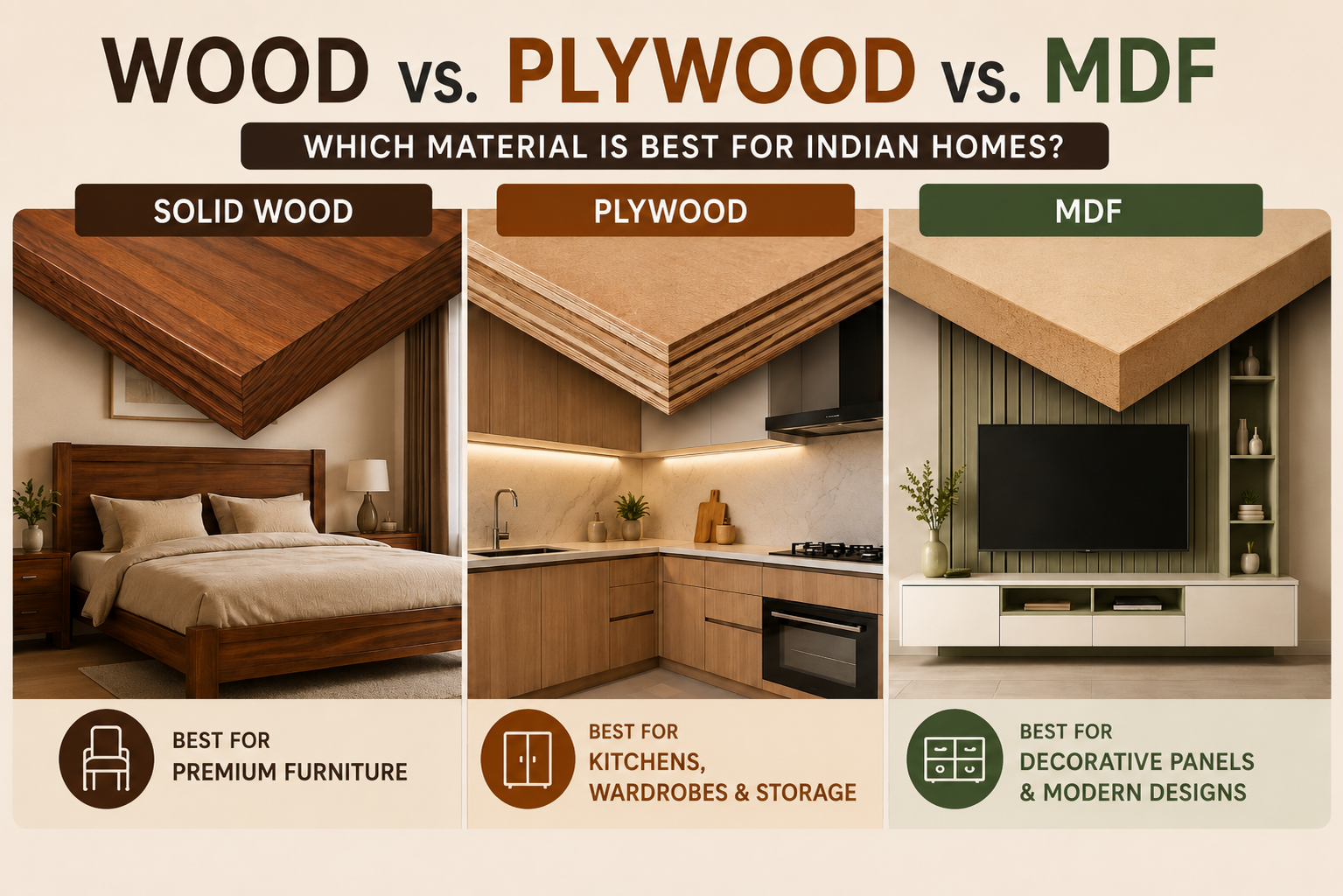
Wood vs. Plywood vs. MDF: Which Material is Best for Indian Homes?
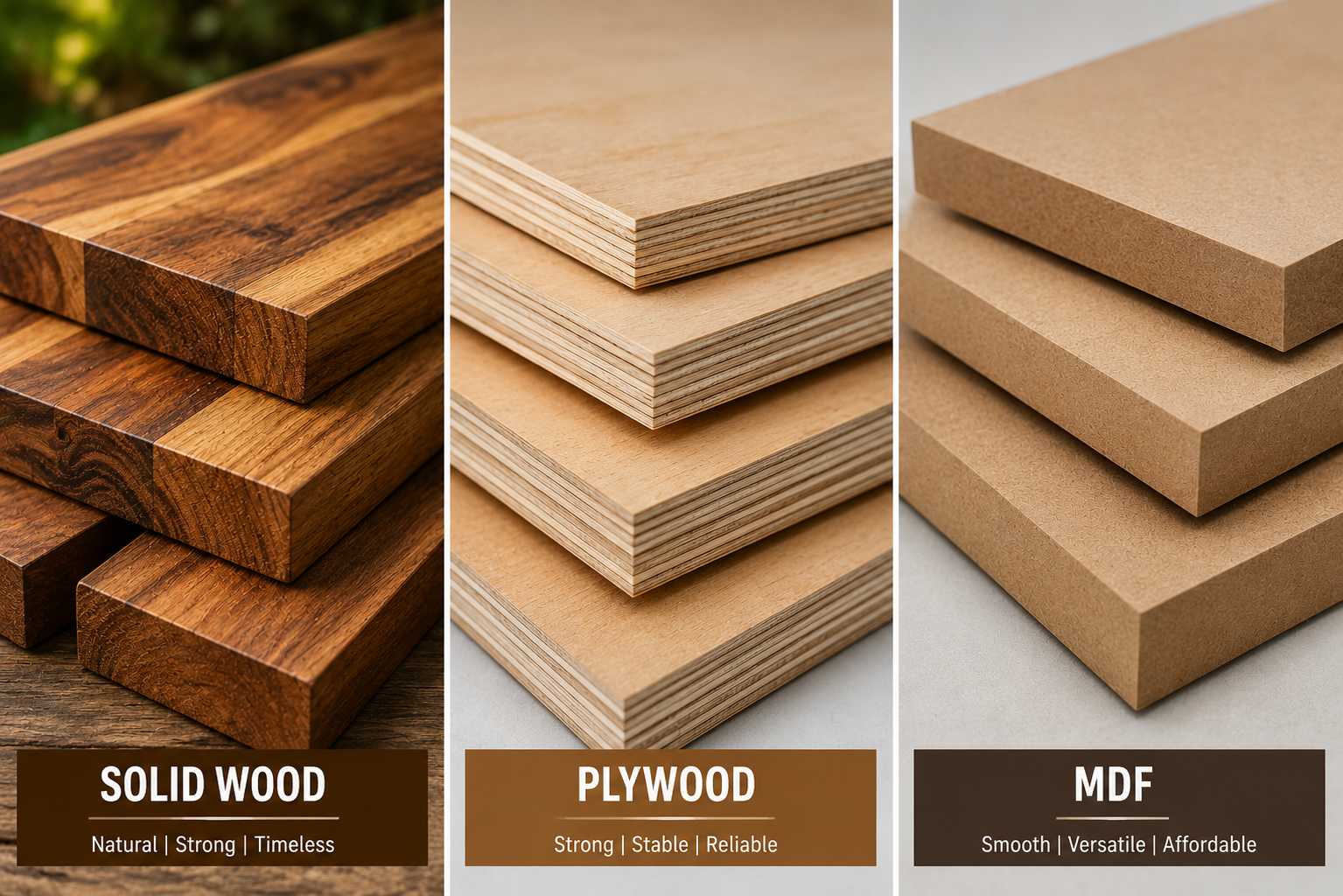
Factor | Solid Wood | Plywood | MDF |
Durability | Excellent | Very Good | Moderate |
Cost | High | Medium | Low |
Moisture Resistance | Moderate | High | Low |
Strength | Excellent | Very Good | Moderate |
Lifespan | 30-50 Years | 15-25 Years | 5-15 Years |
Maintenance | High | Low | Low |
Design Flexibility | Moderate | Good | Excellent |
Which Material Works Best in Different Areas of an Indian Home?
Modular Kitchen: The kitchen is exposed to heat, steam, oil, and moisture daily.
Best Choice: Plywood
A family using their kitchen three times a day needs cabinets that can withstand years of usage. Waterproof plywood performs exceptionally well in such conditions.
Avoid: MDF for sink areas and lower cabinets due to moisture exposure.
Wardrobes Wardrobes need strength to support clothes, accessories, and regular opening and closing.
Best Choice: Plywood
Plywood wardrobes can comfortably handle the weight of hanging clothes and storage accessories.
Premium Option: Solid wood if budget isn’t a concern.
TV Units and Decorative Panels: Modern TV units often feature sleek designs, grooves, and painted finishes.
Best Choice: MDF
Its smooth surface allows for attractive paint finishes and intricate designs.
Beds: Beds require structural strength because they support significant weight daily.
Best Choice: Plywood or Solid Wood
A queen-size bed used by two adults requires a strong base. Plywood offers durability at a reasonable price.
Study Tables and Home Office Furniture: For work-from-home setups, strength and functionality matter.
Best Choice: Plywood
It offers better durability for daily usage and can support monitors, laptops, and storage.
What Do Most Indian Homeowners Choose?
In reality, most modern homes use a combination of materials rather than relying on just one.
As a residential interior designer in Borivali, we’ve noticed a common pattern:
- Plywood for kitchens and wardrobes
- MDF for decorative wall panels and TV units
- Solid wood for premium furniture pieces like dining tables and beds
This approach balances durability, aesthetics, and budget effectively.
Common Mistakes Homeowners Make
- Choosing MDF for Wet Areas: Many homeowners choose MDF because it’s affordable. However, using it near sinks, bathrooms, or moisture-prone spaces often leads to swelling and damage.
- Focusing Only on Price: Saving ₹10,000 initially may result in spending much more on repairs or replacements later.
- Ignoring Plywood Grades: Not all plywood is the same. Commercial plywood, BWR plywood, and BWP plywood have different levels of moisture resistance. Always choose the right grade for the application.
- Not Asking About Internal Material: Beautiful laminates can hide poor-quality boards underneath. Always confirm what material is being used internally.
So, Which One Should You Choose?
If you’re looking for maximum durability and don’t mind spending more, solid wood remains unmatched.
If you want the best balance between strength, cost, and longevity, plywood is the clear winner for most Indian homes.
If your priority is decorative designs, painted finishes, and affordability, MDF can be an excellent choice for specific applications.
The smartest approach is often a combination of all three materials, using each where it performs best. Every home has unique requirements, and selecting the right material can significantly impact maintenance costs, durability, and overall satisfaction in the years ahead.
At Spriha Jain Interiors, we help homeowners make practical design decisions that look beautiful today and continue performing well for years to come. Our interior designing services in Borivali focus on creating spaces that balance aesthetics, functionality, and long-term value, ensuring every material used is suitable for the way your family lives and uses the space.
Frequently Asked Questions (FAQs)
- Which is better for furniture: plywood or MDF?
Plywood is generally better for furniture because it offers higher strength, durability, and moisture resistance. MDF is suitable for decorative furniture, painted finishes, and lightweight applications but may not withstand heavy loads as effectively as plywood.
2. Is plywood waterproof?
Not all plywood is waterproof. BWP (Boiling Water Proof) and marine-grade plywood offer excellent water resistance, making them suitable for kitchens and moisture-prone areas. Commercial plywood has lower moisture resistance and is best used in dry spaces.
3. Which material is best for modular kitchens in India?
Plywood, especially BWR or BWP grade plywood, is considered the best material for modular kitchens. It provides excellent strength, durability, and resistance to moisture, heat, and daily wear.
4. What is the lifespan of MDF, plywood, and solid wood?
Solid wood can last 30–50 years or more with proper maintenance. Plywood typically lasts 15–25 years, while MDF generally lasts 5–15 years depending on usage and exposure to moisture.
5. Can MDF be used in bathrooms or wet areas?
Standard MDF is not recommended for bathrooms or wet areas because it can absorb moisture and swell. Moisture-resistant MDF is available, but plywood remains a safer option for humid environments.
6. Which is stronger: solid wood, plywood, or MDF?
Solid wood is the strongest and most durable option. Plywood comes next due to its layered construction, while MDF is comparatively weaker and better suited for decorative applications rather than structural use.
Which material is best for TV units and decorative wall panels?
MDF is often preferred for TV units and decorative wall panels because its smooth surface allows for painted finishes, CNC designs, grooves, and intricate patterns that are difficult to achieve with plywood or solid wood.